79th Edinburgh International Film Festival - 2026
Reviews are divided based on categories as per the festival.

Out of Competition Features

Bodyhackers
️⭐️⭐️⭐️
Borges and Me
️⭐️⭐️⭐️⭐️
Northbound
⭐️⭐️⭐️⭐️
Sea of Glass
⭐️⭐️⭐️⭐️⭐️
Her Private Hell
⭐️⭐️⭐️
Empty Heaven
️⭐️⭐️⭐️⭐️
My NDA
⭐️⭐️⭐️⭐️⭐️
I Want Your Sex
⭐️⭐️⭐️⭐️
Midnight Madness
BONUS: Selected Shorts
Bad Day at the Office
⭐️⭐️⭐️
Hungry
⭐️⭐️⭐️
Meeting Your Maker
⭐️⭐️⭐️⭐️⭐️
Bad Day at the Office
⭐️⭐️⭐️
FFeature Film (Narrative)
Film Production Company: Action Xtreme
Rating: NR / Run Time: 107 minutes
Language: English
Director: Chee Keong Cheung
Writer: Chee Keong Cheung
Starring: John Hannah, Radha Mitchell, Tamer Hassan, Roxanne McKee,
Tim Fellingham, Branko Tomović, Phil Zimmerman and Lana Parrilla
“It’s time for you to take your medicine.”
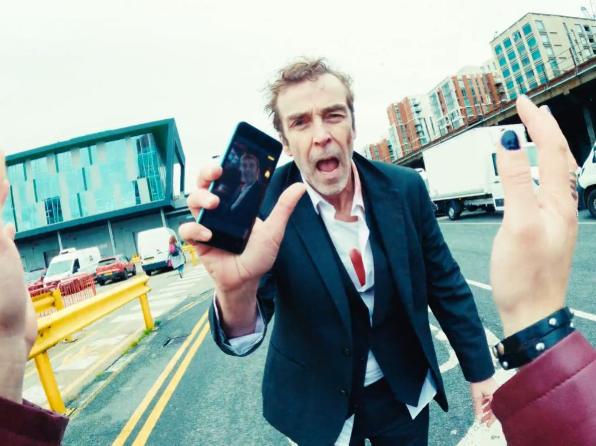
Chee Keong Cheung’s Bad Day at the Office wastes very little time putting its audience into the middle of the chaos. Karl Davis (Hannah) wakes up in a hotel room with no idea how he got there. He is covered in blood, there is a dead body in the bathtub, and there is a surgical scar running down his chest and sternum. When a hotel maid named Molly (Mitchell) discovers him, she is understandably disturbed by what she sees. Things only get stranger when we learn Karl has been staying at the hotel for months, despite having no memory of any of it.
After an incident with the police sends Karl and Molly running, they find a car filled with guns, passports, tear gas and money, making it clear that whatever Karl has gotten himself into is far bigger than a bad night at a hotel. As the pair try to piece together what is happening, Karl discovers that he has hours — a day at most — before acute multiple organ failure kills him. Following clues that lead him back to a hospital, he also learns that several people are after him because he is allegedly responsible for killing a Serbian mob boss. Add in a series of bizarre dreams involving different people, including a mysterious woman played by Lana Parrilla, and Karl’s journey through London’s underworld becomes increasingly difficult to decipher.
Along the way, Karl encounters people who may be helping him or may simply be another obstacle in his path, including the increasingly unhinged mobster Ivan (Fellingham), Dr. Stafford (Zimmerman) and the smooth, fur-coat-wearing Solomon (Hassan), who may hold some of the answers Karl is looking for. The further Karl goes, however, the more complicated everything becomes. Just when it seems like he might be getting closer to understanding his situation, another piece of information changes the picture, and eventually Karl learns that his connection to the violence surrounding him is much deeper than he initially realizes.
The most interesting thing about Bad Day at the Office is how Cheung chooses to tell this story. The film is presented almost entirely from a first-person perspective, putting the audience directly into Karl’s experience. Cinematographers Martyna Knitter and Lorenzo Levrini make the most of the approach, creating something that often feels less like watching an action movie and more like stepping inside a video game. The influence of first-person shooters such as Call of Duty and Halo is obvious, and when the action is working, the effect can be genuinely fun. You aren’t simply watching Karl run, fight and escape; you are experiencing it alongside him.
The problem is that nearly two hours of this becomes a lot to take. Even scenes that aren’t particularly action-heavy continue to move with such intensity that I occasionally felt like I was getting cinematic whiplash. The first-person perspective is an interesting concept, but the film sometimes seems more interested in showing us what can be done with the technique than asking whether every sequence needs it. There are moments that feel as though they were included because they would be especially cool to experience from this particular point of view, rather than because they were necessary to the story.
Hannah brings a certain charm to Karl, even when the character is spending much of the film running, fighting and trying to figure out what is happening to him. In a strange way, you can almost feel his exhaustion as the film progresses, which may very well be part of the point. Mitchell gets to play several different sides of Molly as the story unfolds, while Hassan oozes charm as Solomon, the criminal who may know more than he is letting on. The fur coat certainly doesn’t hurt.
There is an interesting idea at the center of Bad Day at the Office, particularly in the way the film slowly reveals just how involved Karl was in the activity surrounding him. What initially appears to be a man trying to understand why everyone is after him becomes something much more complicated as we learn that his role in the violence runs far deeper than we were led to believe. It is an intriguing turn, but the film takes a bit too long getting there while throwing so many other pieces at us along the way that, by the time the answers arrive, I found myself wondering if I had missed something rather than feeling completely satisfied by the reveal.
The film also goes on a little too long, and I couldn’t help but think that certain sequences could have been removed without losing the story. In a movie built around such an unusual visual concept, there is a temptation to keep finding new ways to use it, but not every idea needs to make it into the final cut. At times, the technique becomes more distracting than immersive. All in all, Bad Day at the Office is an ambitious experiment that doesn’t always know when to slow down.
Click HERE for an exclusive conversation with Writer/Director Chee Keong Cheung and Star John Hannah.
Click HERE for an exclusive conversation with Stars Radha Mitchell and Tamer Hassan.
Review by Cinephile Mike
Bel
⭐️⭐️⭐️⭐️
Feature Film (Documentary)
Film Production Companies: Screen Scotland, National Theatre of Scotland,
BBC, Hopscotch Films
Rating: NR / Run Time: 92 minutes
Language: English
Director: Louise Lockwood
Featuring: Belinda Odenyo, Leah McAleer, Emma Pollock, Aurelia Kungu,
Frances McAleer, Joe Rattray, Lewis Semple, Kathryn Joseph, Chris Kungu, Derek O’Neill,
Gráinne Vedamanikam, Jackie Kay, Hannah Lavery and Vic Galloway
“That sound that comes out is the purest expression of what it means to be broken and what it means to survive.”
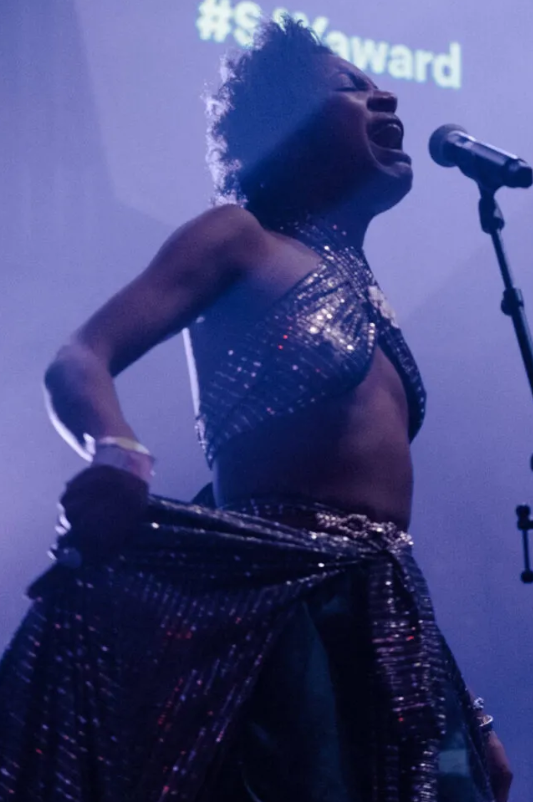
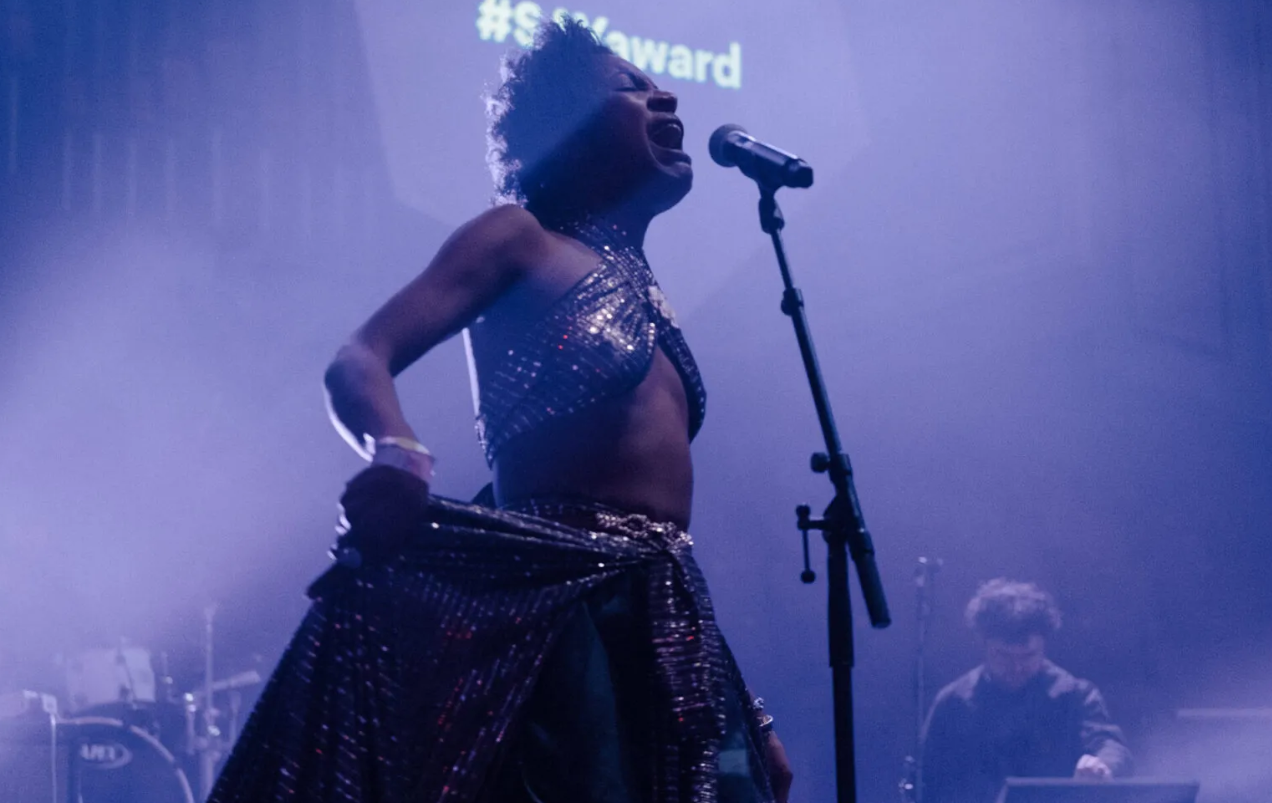
In 2021, Beldina Odenyo seemed to be on the cusp of stardom. Performing under the stage name Heir of the Cursed, she had just headlined at Edinburgh’s Usher Hall as part of the Scottish Album of the Year Awards. Her performance was a revelation, showcasing a powerful and haunting voice that seemed destined to carry her much further. Two weeks later, at the age of 31, Bel took her own life.
Director Louise Lockwood’s documentary begins the process of trying to understand the woman behind that voice. At the center of the film is Bel’s sister Leah McAleer, who goes through boxes of journals, diaries and notes left behind by her sister. Bel had written a will leaving everything to Leah, and among those belongings was a hard drive containing files labeled “Passable Demos.” Leah believes the songs—and the story behind them—deserve to be heard.
As we begin to understand Bel, we see someone who struggled to communicate and came from a fractured home. Raised in Scotland by her father and half-siblings after coming from Kenya, she often found herself feeling like an outsider. In Kirkconnel, where there were few other Black people, she experienced racism and the feeling of always being watched. Music became the place where she could finally express herself, recording her first CD at just 14.
The film moves between interviews with those who knew Bel, home movies, personal video diaries and footage of her performing, slowly filling in the picture of a woman whose voice seemed to say everything she herself sometimes struggled to communicate. Her sisters Leah and Aurelia Kungu, brother Chris Kungu, musician Lewis Semple, singer-songwriter Kathryn Joseph and others help piece together the person they knew.
We also learn about the experiences that shaped Bel. Her mother Rebecca had remained in Kenya, and Bel did not have a relationship with her until she visited her at around ten years old. After that visit, her mother became ill and died four years later. Bel rarely spoke about the impact of that loss, instead building a shrine to her mother and throwing herself into her music. At the same time, her older sister Kathy, who had been an important presence in her life, was also ill and eventually died.
Music, however, continued to give Bel a way to communicate. When she moved to Glasgow around 2008, she described the city as the “Scottish Harlem,” a place where everything seemed to exist within a small area and where she could finally feel visible rather than watched. That sense of liberation became an important part of the artist she would become.
Lockwood does a good job of letting the music tell part of that story. We hear the tracks Bel left behind as her family and friends listen to them, and the film frequently gives us the space to simply sit with her songs. Her voice is already powerful, but knowing the circumstances surrounding these recordings gives it an added haunting quality. When the lyrics of “The Vessel” appear on screen, the words take on another weight as we begin to understand just how much Bel was communicating through her music. As we are treated to other elements of her life, we see how the music, while in many ways a saving grace, also had its restrictions.
There is no denying that Bel is a well-made documentary, and there is something deeply moving about Leah’s determination to make sure her sister’s music does not simply remain on a hard drive. Her decision to bring her children to visit Bel’s Kenyan village adds another personal dimension to that effort, connecting the music and memories of Bel to a place that was an important part of her story.
The structure of Bel may feel familiar to anyone who has watched documentaries that seek to preserve the legacy of an artist after their death, but that familiarity doesn't diminish what Lockwood and Leah are accomplishing here. More importantly, the film did something I think the best music documentaries can do: it introduced me to an artist I had never heard before and made me want to seek out her music for myself. All in all, Bel is a touching love letter to an artist whose life was cut far too short, and one that ensures Bel’s voice has the chance to reach a much wider world.
Review by Cinephile Mike
Bodyhackers
⭐️⭐️⭐️
Feature Film (Narrative)
Film Production Companies: Mirabilis, Risi Film, Sears Filmes
Rating: NR / Run Time: 83 minutes
Language: English
Director: Carlos Conceição
Writer: Carlos Conceição
Starring: McCaul Lombardi, Joana Ribeiro, Elina Löwensohn, Jenna Thiam,
Alba Baptista, Ivo Arroka, André Cabral and Dinarte de Freitas
“Whatever crap they’re injecting people with, I’m going to expose it. It’s gonna be known.”
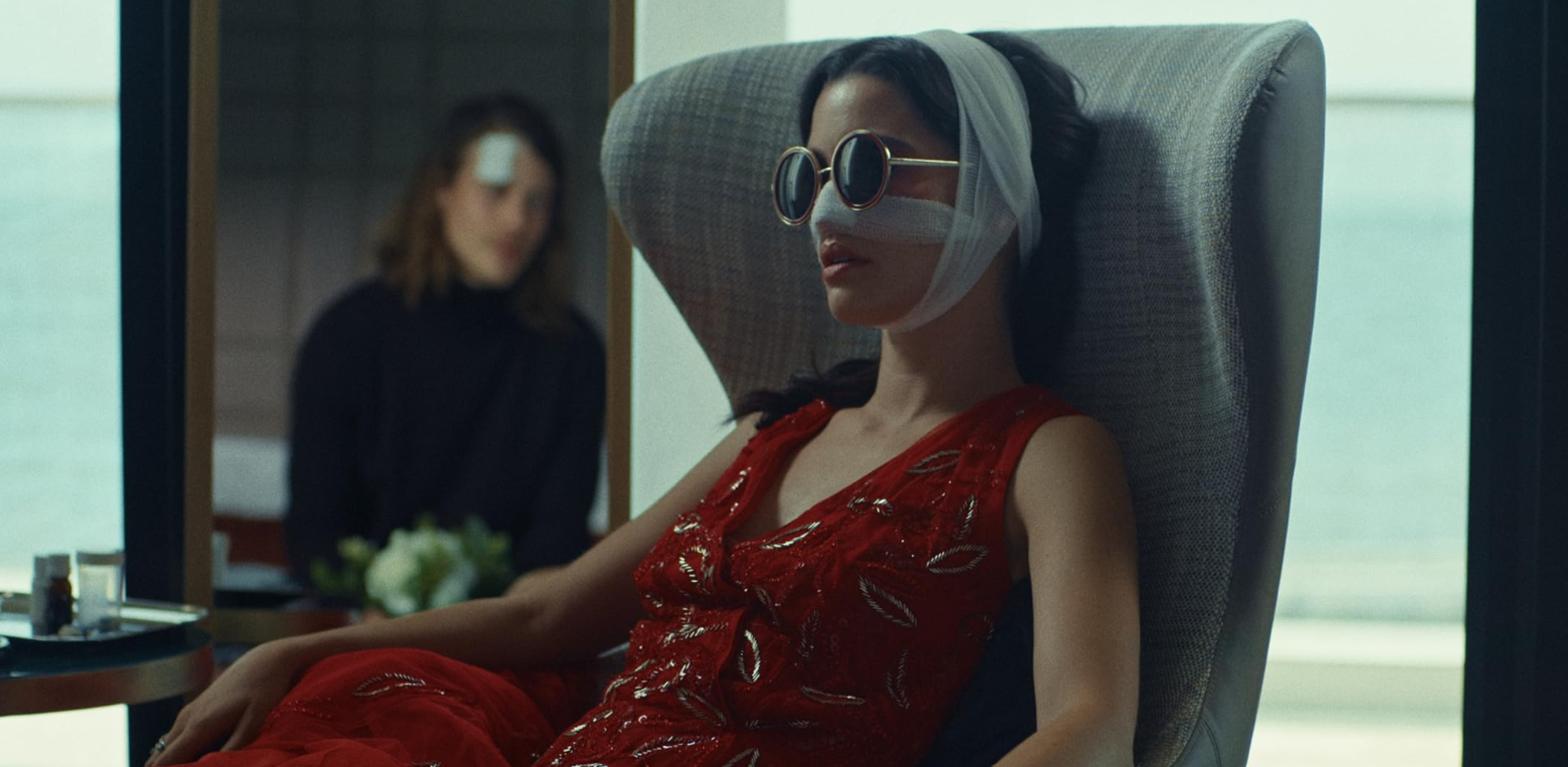
Imagine a world where you can get whatever you want done. No matter what look you desire, it is achievable. Vitruvio Beauty Corp is there to make it happen. The film opens with a disclaimer about its depiction of surgical procedures, and it doesn't take long to understand why. Among the company's patients is Renée Welles (Ribeiro), a woman who suffers from Beauty Deficit Disorder and is convinced that her appearance needs continual correction. The problem is that she has reached the point where another procedure could permanently damage her tissue, leaving even the renowned Dr. Pollard (Löwensohn) unable to help her.
Then Renée encounters Denver (Lombardi), a man whose appearance seems almost too perfect to be real. With fair skin, chiseled features, a perfectly curved nose and eyes that appear to have been drawn by a surgical blade, he immediately captures her attention. When she sees him being assaulted outside the facility, she offers him a ride, taking him back to the home that once belonged to his father. It isn’t long before they are drawn to one another as more than mere acquaintances.
Denver is a waste analyst who has been investigating Vitruvio. Posing as a doctor, he has stolen samples of the company's fillers and other materials because he believes their work may have been connected to his father's death. He plans to take the samples to McCreary (de Freitas), hoping they can reveal what Vitruvio is actually doing. But as Denver becomes increasingly immersed in Renée's world—and even spends time with other patients—his certainty about his own mission begins to waver.
Writer/Director Conceição creates a sleek, minimalist world that feels appropriately clinical. Art director Artur Pinheiro and set decorators Catarina Campos and Marianne Harlé give both the homes and medical facilities a polished aesthetic that feels almost too perfect, while the visual effects and special-effects makeup from José André and João Rapaz make the surgical procedures particularly effective. And they are not easy to watch.
Through Rui Poças' cinematography, the procedures are captured with a Cronenbergian discomfort that may have you shifting in your seat and reconsidering ever going under the knife yourself. There is something intentionally unsettling about watching bodies being altered in the pursuit of an ideal, particularly when Renée continues to see imperfections in herself despite what everyone else sees. Additionally, Nuno Bento's haunting score consistently keeps the atmosphere uneasy, adding another layer to a world where everything looks beautiful while something underneath feels very wrong.
At its strongest, Bodyhackers treats plastic surgery almost like an addiction. The film explores the beauty industry's ability to convince people that what they already have isn't enough, while also questioning what happens when the desire to become someone else begins to replace the person you were. Ribeiro gives Renée an effective vulnerability as a woman who cannot see herself the way others do, while Lombardi brings a quiet conflict to Denver as his desire for revenge begins to compete with the life he finds himself experiencing.
Unfortunately, the film's central story gets sidelined by several of Denver's side adventures, pulling us away from the more compelling relationship between him, Renée and Vitruvio. There are fascinating ideas here about beauty, obsession, identity and the desire to right past wrongs, but some of them remain less developed than they deserve to be. All in all, Bodyhackers offers an unsettling look at our obsession with beauty and the lengths we will go to reshape ourselves, even if the film doesn't always make the most of its intriguing ideas.
Click HERE for an exclusive conversation with Writer/Director Writer/Director Carlos Conceição, Delegate Producer Frederico Mesquita and Star Joana Ribeiro.
Review by Cinephile Mike
Borges and Me
⭐️⭐️⭐️⭐️
Feature Film (Narrative)
Film Production Companies: Big Beach, A Private View, Lemming Film
and Ossian Pictures
Rating: NR / Run Time: 109 minutes
Language: English
Director: Marc Turtletaub
Writer(s): Oren Moverman based on Jay Parini’s book and screenplay
by Parini and Ross Clarke
Starring: Fionn Whitehead, Luis Gnecco, Peter Mullan, Morven Christie, Freya Mavor and Alan Cumming
“To describe something, you must be one with it.”
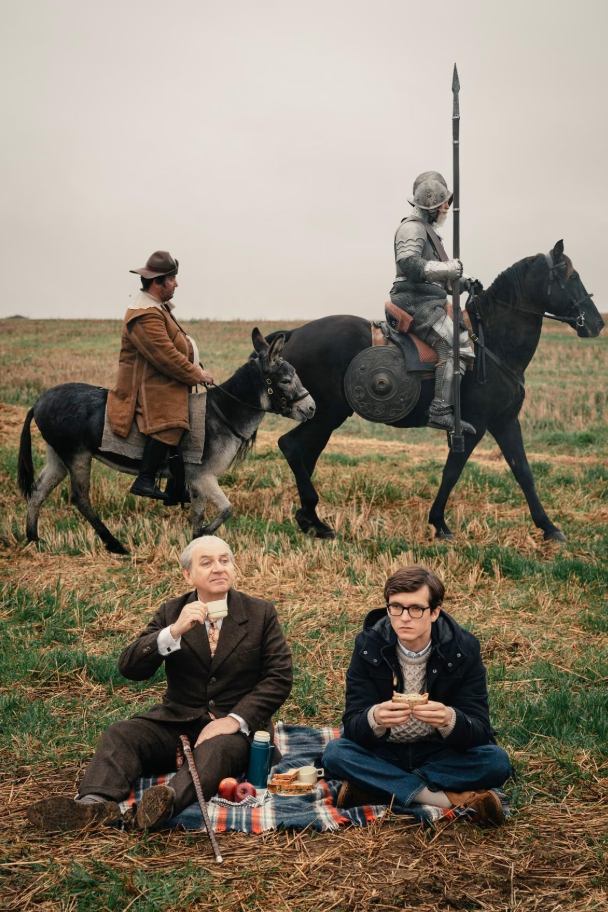
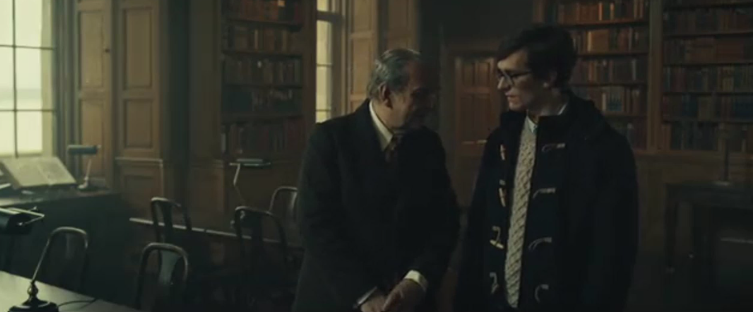
Jorge Luis Borges (Gnecco) is considered one of the fathers of magical realism, and in 1971, American poet Jay Parini (Whitehead), studying at St. Andrews in Scotland, would have an encounter with the legendary writer that would change the course of his life. Parini is searching for a mentor, hoping to find his voice as a writer, and initially believes that George Mackay Brown might be the person to guide him. First off, however, he meets poet Alistair Reid (Cumming), who presents some very frank feedback on his work.
When Alistair offers to help Parini, there is one condition: he must spend time with Alistair’s ten-year-old son, Jasper. But when Alistair needs to leave, Parini suddenly finds himself responsible for another assignment. Borges, blind, has arrived to stay with Alistair and Jasper. Parini only has two days, so, with Borges desiring to go on the trip and “see” the Highlands again, he accompanies Parini on his journey. What begins as an unexpected responsibility quickly becomes a journey that will challenge Parini to look at both the world and himself differently.
Their travels take them through the Highlands and eventually toward Orkney, where Parini hopes to meet Mackay Brown. Along the way, the young poet begins to see the world differently through Borges’ perspective. Speaking freely and without a filter, Borges hangs on to Parini and asks him to describe what he sees, not always as easily said as done. As they stop several times along the way, it is a trip to Loch Ness that takes an unexpected turn, and ultimately we see how the road trip between mentor and mentee instructs on both ends.
Director Marc Turtletaub brings an extraordinary visual beauty to the journey. Christopher Norr’s cinematography is gorgeous, capturing the Scottish Highlands in a way that makes you want to jump into your car and simply drive through them. The landscapes become more than a backdrop for Parini and Borges’ travels; they become part of the experience as the two men move through a world that seems perfectly suited to Borges’ fascination with perception, imagination, and the written word.
Volker Bertelmann’s score is equally effective, creating the music of this world while also providing an understated accompaniment to the film’s moments of magical realism, though you may find yourself wishing these were explored a bit more. There is a wonderful balance between the natural beauty surrounding these characters and the sense that something slightly more mysterious is always just beneath the surface.
Fionn Whitehead does a very good job as Parini, encompassing the frustration of a young man who is neither a boy nor quite a man. As he finds himself in circumstances far removed from what he knows, Whitehead captures the wonderful innocence of someone who wants to be a writer but is slowly learning that wanting to write and actually becoming a writer are two very different things. His journey is ultimately about finding his voice, and the relationship he develops with Borges becomes central to that discovery.
But the film belongs to Luis Gnecco. His portrayal of Borges is so delightful and captivating that he commands the screen every time he appears. There is something about his performance that makes you want Borges to reach out, grab your arm, take you on a walk, tell you a story—or simply sit and listen as he tells you one. Gnecco brings a warmth and presence to Borges that makes the character feel less like a literary legend and more like someone you desperately want to spend time with.
There is a gentle humor throughout the film, but it never overwhelms the more reflective elements of the story. Instead, Borges and Me becomes a film about discovering how to see the world, how to find your voice, and perhaps most importantly, how to stop waiting for someone else to tell you who you are supposed to become. All in all, Borges and Me, while a story we have seen before and doesn’t quite reach the heights of its extraordinary central performance, will still leave you with a reminder that not everything is as it appears to be.
Review by Cinephile Mike
Capsized
⭐️⭐️⭐️⭐️
Feature Film (Narrative)
Film Production Company: Lost at Sea Films and Present Company
Rating: NR / Run Time: 105 minutes
Language: English
Director: Lindsey Ryan
Writer: Lindsey Ryan
Starring: Rhys Ifans, Lily Rabe, Sarah Catherine Hook, Griffin Gluck, Ada Bland,
Eli D. Goss and Joan Stein
“The O’Briens don’t adhere to time, they adhere to adventure.”
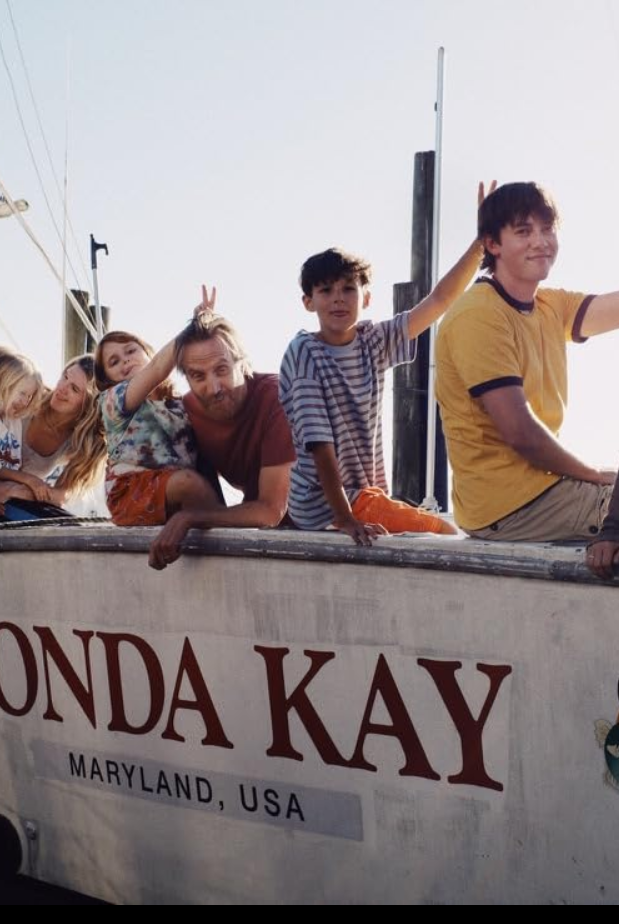
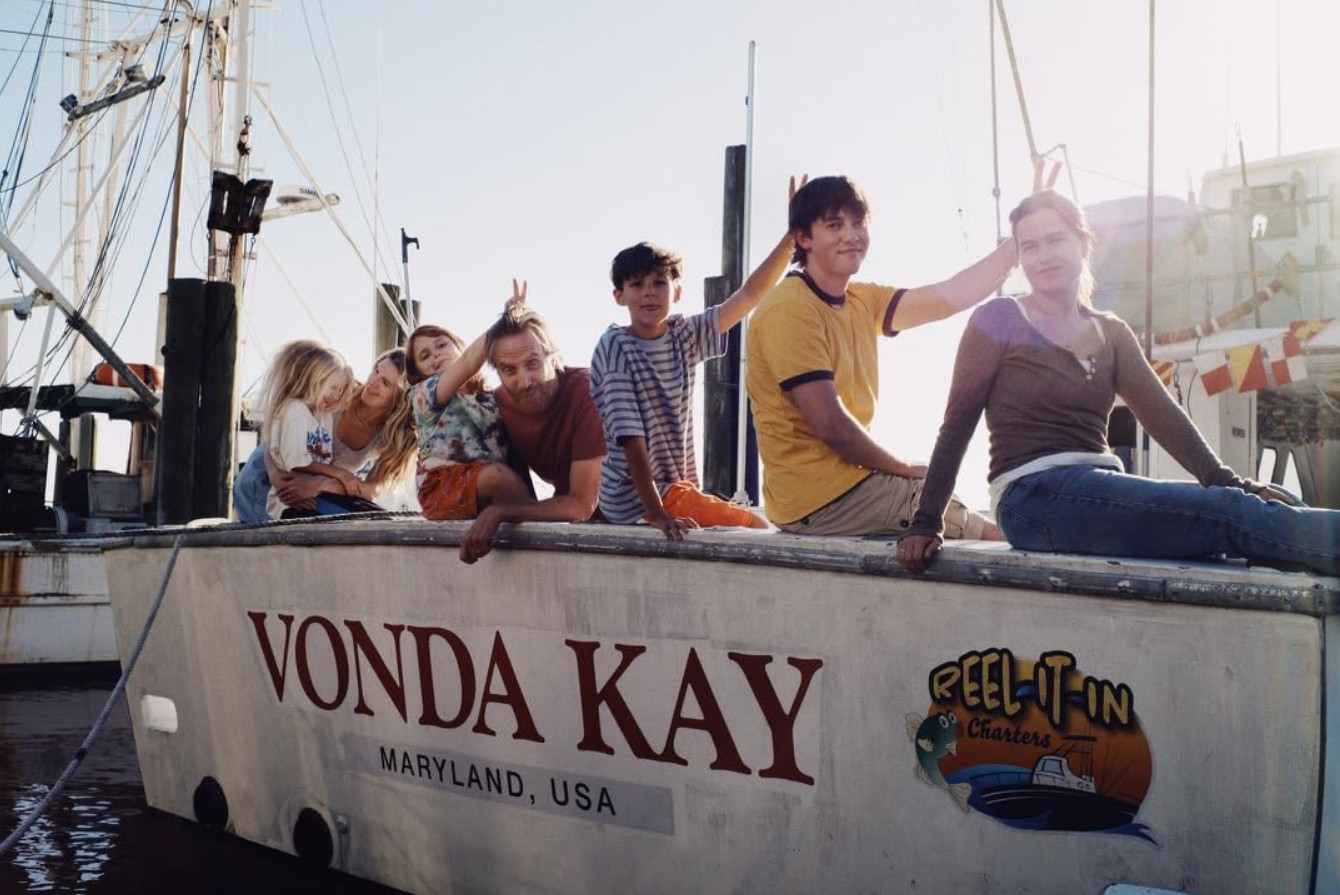
Meet the O’Briens — patriarchs Ray (Ifans) and Diane (Rabe) — and their five children, recently graduated twins Nicole (Hook) and Pat (Gluck), preteens Jack (Goss) and Ellie (Stein) and the young Maeve (Bland). Think your standard, middle-class family. Nice house in the suburbs of Long Island, New York, enjoying coastal living, a boat in the harbor, and just getting by. They are planning to go on a family vacation and take the boat out one last time before Nicole heads off to college.
It isn’t long before we learn that this may be the last major hurrah for the family, as they are about to face some hard times. We learn that, as a result of some poor investments made by Ray, the family was unable to pay the mortgage and they are being evicted from their home and need to plan their next steps. This also throws a wrench in Nicole’s plans, as she was hoping her family was going to be paying for her college tuition. It is on this boating trip that Ray and Diane hope to figure out what comes next.
As they venture off and try to make connections, they learn of a fishing contest in Maryland that could result in a big financial win, and thus they set off. However, this will not be without its challenges, as secrets come to the surface and the family is forced to reckon with decisions that were made and comments that were spoken that could have irrevocable damage moving forward. As the family heads to Maryland, competes and contemplates what comes next, it is safe to say that this is a summer that will change everyone.
In her feature film debut, writer/director Lindsey Ryan crafts a powerful story about family that almost everyone will be able to connect to. Each member, be they adult or child, has a personality trait that will either echo yourself or someone you know. We all have the younger child who mirrors the poor behaviors of adults, the child who sometimes has to grow up and care for the family when it isn’t meant to be their lot in life, or even the frazzled member who has to decide whether they made the right choice for themselves and others. However, at the end, it is a family, for better or worse.
Ryan has grouped a phenomenal ensemble of characters to play the O’Brien family, and taking them on the boat trip has echoes of the family road trip akin to Little Miss Sunshine, with all the pathos and chaos. It is blended nicely with strong turns by Ifans’ Ray, who is lovable one moment and then you are ready to throw him overboard the next, and especially the powerhouse performance of Hook’s Nicole — the moral center of this family who has just had enough.
With a majority of the film shot on water, cinematographer Joe Anderson helps capture the claustrophobic setting and allows the tension to rise as we go. As we follow the family, we root for them, aided by an effective and emotional score by Osei Essed. The thing that sets Capsized apart from other similar films is that it reminds us that all of life’s challenges aren’t always going to necessarily have a happy ending by the time the credits roll, and that’s life.
There are a few subplots that get introduced that make for some rich character development for select members of the family, but we needed a bit more time with some of these threads to really understand what is happening beneath the surface. That is particularly true as we watch the relationships within the family evolve. We see the frustrations, the arguments and the moments when it would be easy for someone to simply walk away, but when the family is truly tested, they continue to find ways to come together. That only makes the moments when they don't understand each other more interesting, and shows just how complicated family can be.
That said, it only shows that the world Ryan has created is one to spend time in. All in all, this touching family dramedy will remind us that choices are made for reasons; we may not agree with them, but we shouldn’t let them restrict us from moving forward.
Click HERE for an exclusive conversation with Writer/Director Lindsey Ryan.
Review by Cinephile Mike
Empty Heaven
⭐️⭐️⭐️⭐️
Feature Film (Narrative)
Film Production Companies: Solo Cinema, Ark Gate Films, Mediamax, NivaArt
Rating: NR / Run Time: 87 minutes
Language: Persian with English subtitles
Director: Abdolreza Kahani
Writer: Abdolreza Kahani
Starring: Alhelou Alvand, Erfan Bokaei, Hanieh Borghei, Mahdi Eftekhari,
Hamidreza Hosseini, Diana Laalkaei, Zahra Masoumi, Mostafa Pouralamdari,
Pouya Razavi, Aida Rezaei, Fatima Rouzi, Nima Sadr, Mojan Safari, Hesam Sobhani, Misa Tabarzadi, and Hossein Tofighi
“In that system right now, it’s every man for himself.”
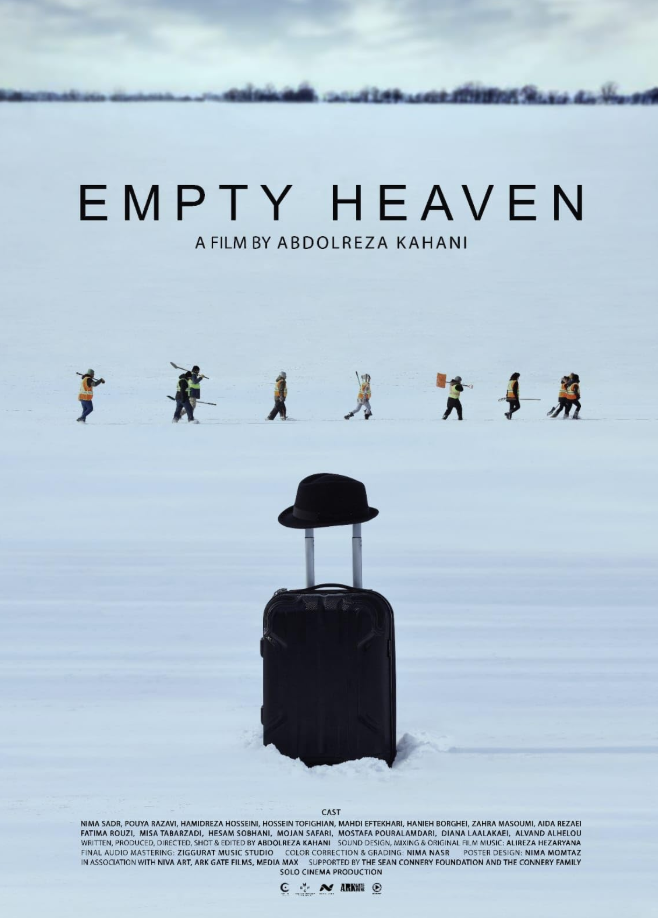
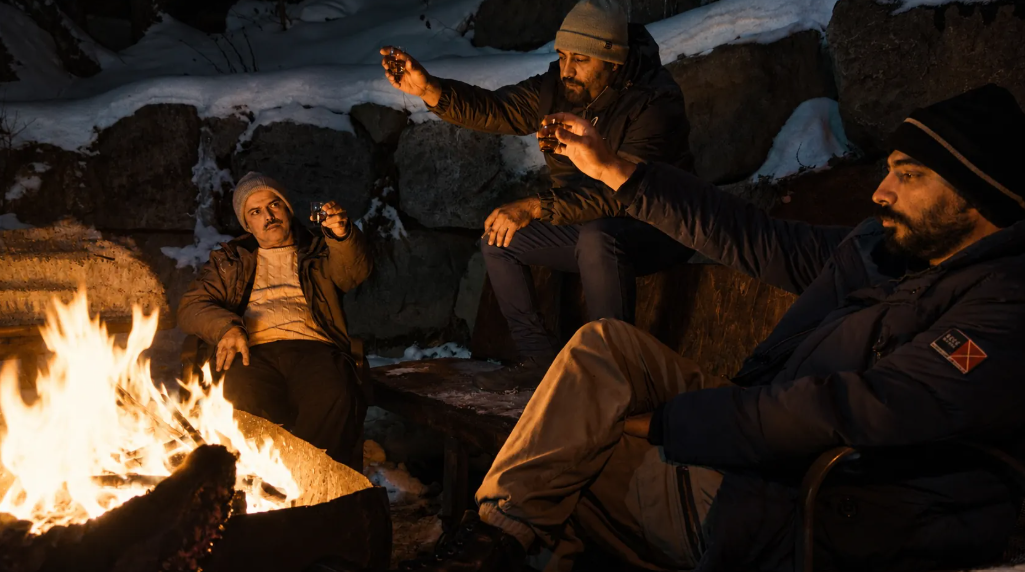
Saeed (Sadr) appears to have a fairly simple assignment. Working for four men—Mostafa (Tofighi), Morteza (Razavi), Mansoor (Eftekhari) and Reza (Hosseini)—he has been given a series of delivery tasks across Canada. He isn't sure exactly what he is delivering, but there is an added benefit to completing the assignments: at each stop, he will meet a new woman—five in total. Should he find one he likes, the men will arrange a proposal on his behalf—his ultimate endgame. Living with these men in the middle of the Canadian wilderness, he goes about the tasks.
Saeed and his colleagues have all relocated to Canada as Iran is in turmoil, and news reports hint at a larger network operating beyond the lives of the people Saeed encounters. As he goes on this journey from city to city, meeting more women and delivering increasingly suspicious packages, it becomes clear that his search for a potential wife is only one piece of a much larger puzzle.
Along the way, the women he meets include Raheleh (Borghei), a single mother to daughter Hoda (Laalkaei), Safoora (Rouzi), Maryam (Rezaei), Homa (Tabarzadi), and Bahareh (Masoumi). As he meets each one, they represent very different approaches to life, with some more outspoken than others and some holding more closely to traditional cultural values. As he spends time with each of them, Saeed will ultimately have to make his decision—or so we are led to believe.
As these journeys grow stranger with each stop, Saeed begins to realize that not everything is as it appears to be. The deliveries become increasingly difficult to explain, and what initially seemed like a straightforward arrangement begins to carry consequences far beyond simply deciding which woman he might want to marry. All the while, Saeed himself remains something of an enigma, and as the film progresses, we begin to question whether we truly understand why he is doing any of this in the first place.
That uncertainty is one of the things that makes Empty Heaven so engaging. Writer/director Abdolreza Kahani allows the story to unfold patiently, giving us information without always explaining how the pieces fit together. The political circumstances surrounding these characters are present throughout, but Kahani never allows them to overwhelm Saeed's personal journey. Instead, they become part of the environment through which he moves, adding another layer of tension to a story where almost no one appears to be completely forthcoming.
Kahani's filmmaking is equally impressive. Taking on multiple roles behind the camera, he creates a film that looks remarkably slick while maintaining a grounded, almost cinéma vérité quality. The cinematography frequently plays with higher and lower angles, altering our perspective of the characters and occasionally withholding information from us in the same way the narrative does. There is also an effective use of silence throughout the film. Kahani is comfortable allowing moments to simply play without forcing the audience to feel something through music. Natural sounds often take precedence, creating an intimacy that can suddenly become tense. When Alireza Hezaryan's score does emerge, its minimal use makes those moments all the more effective.
What makes Empty Heaven particularly interesting is the way Kahani plays with our expectations. We think we understand what Saeed wants and why he has agreed to this unusual arrangement, but the film gradually begins to suggest that there is much more happening beneath the surface. When the larger picture finally begins to emerge, Kahani delivers information in a way that made me immediately rethink much of what had come before. All in all, Empty Heaven is a quietly tense and beautifully crafted thriller that keeps its cards close to the chest until it is ready to show its hand.
Review by Cinephile Mike
Her Private Hell
⭐️⭐️⭐️
Feature Film (Narrative)
Film Production Companies: Neon and byNWR
Rating: NR / Run Time: 110 minutes
Language: English
Director: Nicholas Winding Refn
Writer(s): Nicholas Winding Refn and Esti Giordani
Starring: Sophie Thatcher, Charles Melton, Havana Rose Liu, Kristine Forseth,
Shioli Kutsuna, Aoi Yamada, Dougray Scott, Diego Calva and Jason Hendil-Forssell
“Take care of your daughters, or he will.”
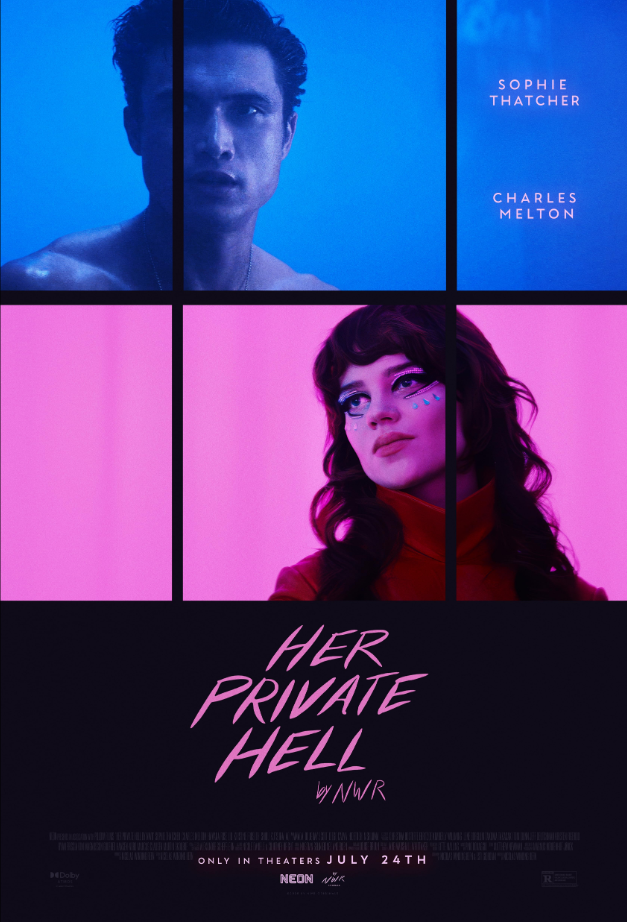
No stranger to neon-infused dominions, Nicolas Winding Refn now enters a dystopian future where a sleek city sits encapsulated by a strange mist. Amidst this new world, we follow actress Elle (Thatcher), who is at a crossroads. Her relationship with her father, filmmaker Johnny Thunder (Scott), is strained, but hoping to repair it, she has agreed to star in his newest feature film, Candy Floss. However, if the challenges with her father aren't enough, she also has to contend with those around her.
There is Hunter (Froseth), a naive and excitable young ingénue who can't believe she has the chance to make the film. Having lost everything, including her family, to this strange mist, she clings to the life that Elle has. Then there is Dominique (Liu), Elle's former best friend who is now her stepmother. As Elle attempts to navigate her complicated relationships, another story is unfolding elsewhere, as Private K (Melton) searches for his missing daughter.
The two narratives eventually begin to intersect through a mysterious figure known as the Leatherman, a seemingly supernatural killer whose own search for his daughter has taken him into an underworld of his own. Johnny provides some of the mythology surrounding this figure, explaining that the Leatherman became cursed after spending years searching for his daughter. From there, however, we are left to piece together what is happening as the Leatherman moves between planes of existence and the boundaries between reality and something far more metaphysical begin to blur.
This film is a lot to take in. On one hand, there is an underdeveloped script looking at a fascinating mythology that could make for an interesting character study. On the other, there is a world so carefully constructed that it is difficult not to become immersed in it. Production designer Gitte Malling and costume designer Pino Donaggio create a sleek, otherworldly environment that feels like it exists somewhere between science fiction and fantasy, while cinematographer Magnus Nordenhof Jønck captures it stunningly. The visual language is one of the film's greatest strengths. The neon hues, elaborate designs and intricately staged action sequences create moments that are genuinely striking, even when the story surrounding them becomes difficult to follow. There are flashes throughout Her Private Hell that hint at something much larger and more ambitious underneath the surface.
The performances are more complicated. Sophie Thatcher and Charles Melton are both good enough in their respective roles, but the underdeveloped characters leave them with a lot to accomplish in a limited amount of time. Thatcher in particular has to carry much of Elle's emotional journey while the film keeps introducing new layers to her world without always giving those layers enough room to develop. There almost seems to be a condensed season of American Horror Story taking place here—a masked killer stalking different planes of existence, some physical and some metaphysical, while the characters attempt to understand the world around them. The further we go, however, the more the film asks us to connect pieces that it doesn't always give us enough information to complete.
That becomes the biggest frustration with Her Private Hell. Elle's attempt to repair her relationship with her father and Private K's search for his daughter are ultimately connected by a larger idea of family, loss and the lengths we will go to for the people we love. But because these stories develop so separately, their connection can feel more like parallel tracks than one cohesive journey. By the time everything begins moving toward its climax, the ambition is clear, but the path to get there is considerably less so.
Perhaps that is part of Refn's intention. He has created a world where the boundaries between the physical and metaphysical are deliberately unstable, and there is certainly something admirable about his refusal to explain everything. But there is a difference between leaving room for interpretation and leaving the audience struggling to understand which pieces are supposed to fit together. And yet, I couldn't completely dismiss the film because I was fascinated by what I was watching. Refn has created a world that is visually arresting, occasionally hypnotic and filled with ideas that I genuinely wanted to explore further. Even when the narrative lost me, the filmmaking kept pulling me back in. All in all, Her Private Hell is an ambitious and visually striking experiment that doesn't completely come together, but there is enough beneath its neon surface to make me wish Refn had given these ideas more room to breathe.
Review by Cinephile Mike
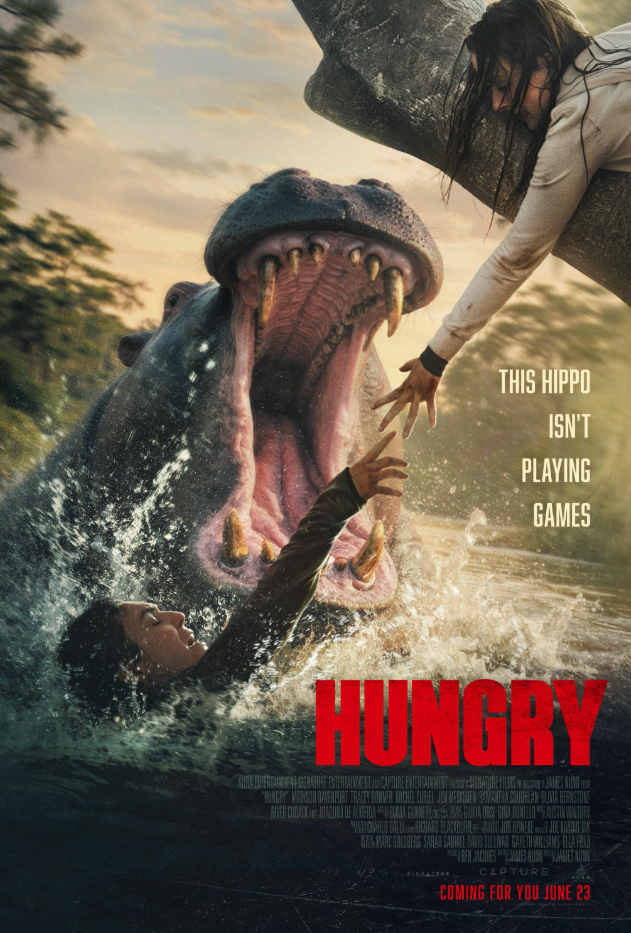
Hungry
⭐️⭐️⭐️
Feature Film (Narrative)
Film Production Company: Signature Entertainment
Rating: NR / Run Time: 93 minutes
Language: English
Director: James Nunn
Writer: James Nunn
Starring: Madison Davenport, Olivia Bernstone, Tracey Bonner, Michel Curiel,
Samantha Coughlin, Jim Meskimen, River Codack and Joaquim de Almeida
“We’re not here for a long time, we’re here for a good time.”
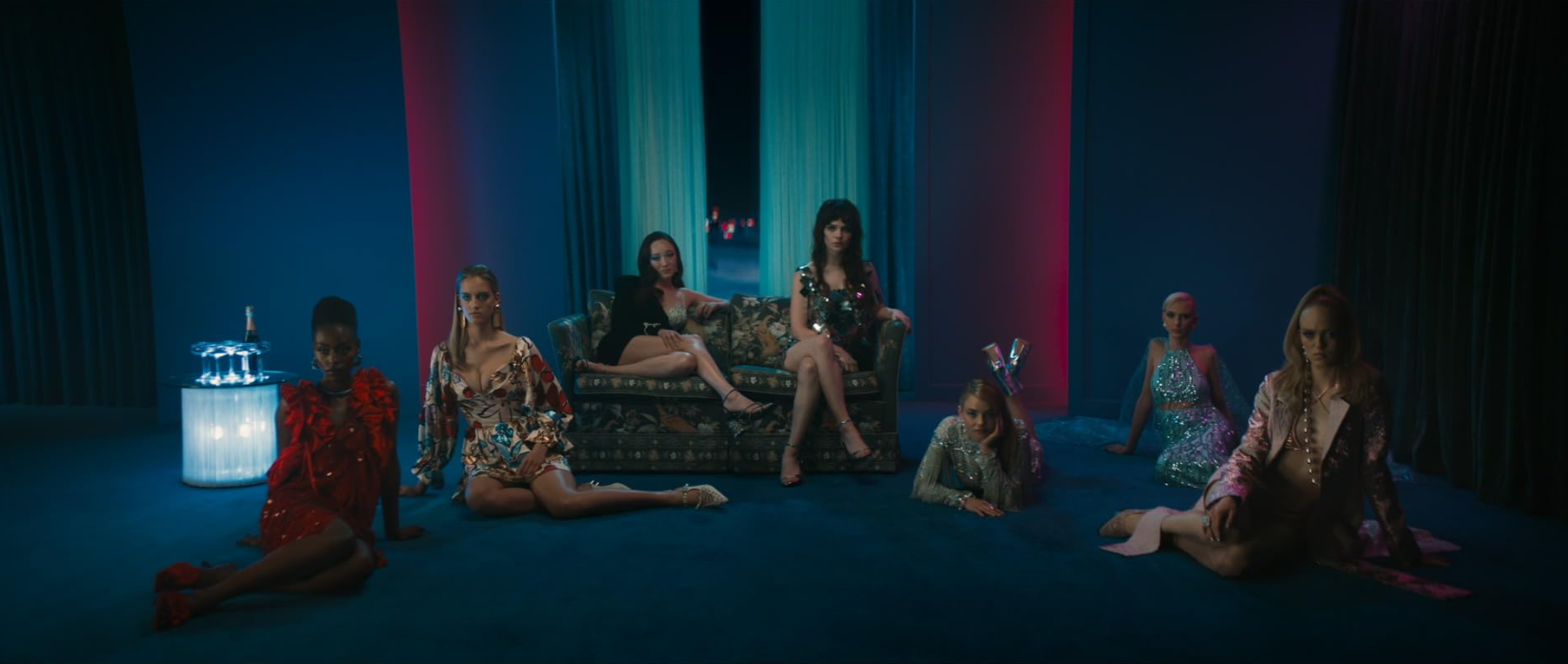
A wonderful idea—unless someone, or something, has other plans. This mantra is spoken by Sistene (Davenport) and Hannah (Bernstone) as they approach life while vacationing in New Orleans. The drinks are flowing and a good time is being had by all until Sistene receives some distressing news regarding her job. Upset, Hannah is not about to let her losing a job she never liked keep them from having a good time, and that is just what Rodrigo (Curiel) promises them. An employee for Gator Joe’s, he convinces them to come out, at a discount, for a swamp tour. Agreeing, Sistene reluctantly decides to go the next day.
As they prepare to leave, they meet the rest of the passengers on the little boat, and we begin to wonder who will still be with us by the end of the trip. There is Tim (Meskimen), a former member of the military traveling with his daughter Sally (Coughlan), a nurse, and his grandson Mikey (Codack), who takes an instant liking to Sistene. Rounding out the group is stressed businesswoman Dionne (Bonner), who Rodrigo has promised will see the biggest gator in the bayou, Big Ben. The group sets off, and it isn't long before they are deep in the water and learn that they are not alone.
When their tour takes an unexpected detour, they find themselves in territory they were never meant to enter. Before long, the group realizes that something enormous is stalking the waters around them. As one by one they begin to disappear, the survivors are forced to find a way to land and uncover just what has brought this unexpected predator to the Louisiana bayou.
That mystery is one of the elements that helps Hungry stand apart. Without giving away too much, Nunn builds his premise around a little-known piece of American history involving an early 20th-century proposal to introduce hippos to the United States. The proposal never came to fruition, but Hungry imagines an alternate history in which the consequences were far more dangerous. In my opinion, that is what sets Hungry apart from creature features that simply have an animal snacking on unsuspecting humans who happen to be in the wrong place at the wrong time. This may not speak to everyone, but for those who just want to watch animals attack unsuspecting—and yes, sometimes annoying—individuals and get theirs, you will not be disappointed.
The film is a bit on the longer side as we build toward meeting our giant friend for the first time, though I appreciated some of the teases à la Jaws. There are a few moments when the events of the film trudge along, however, and when we move into the third act, there is a lot to unpack that can leave you feeling a bit thrown off-kilter.
The performances are fine, with Davenport excelling as Sistene, the primary character we follow on the journey. She has an interesting arc, even if it becomes a bit bogged down by backstory that attempts to align her angst with that of her attacker. Still, there is enough energy in her performance to keep us with her. There are also a couple of characters who hang around a bit longer than you might like, but that leads to a certain catharsis as things play out.
What makes Hungry interesting is that Nunn clearly wants to do more than simply unleash an animal on a group of unsuspecting tourists. There is an attempt to build mythology around the creature, connect the attack to a larger piece of history and give Sistene a more personal journey alongside the carnage. Unfortunately, those additional elements don't always sit comfortably beside the straightforward creature-feature thrills. At times, the film seems caught between wanting us to simply enjoy the chaos and asking us to invest in a mythology that isn't always given enough room to develop.
Visually, the film is sharp enough, and the effects used to bring our predator to life are impressive, giving us something genuinely threatening when she makes her presence known. Ultimately, there is a good basis here for an interesting thriller, but some of the elements become a little unbalanced. All in all, Hungry may not always know exactly how much it wants to bite off, but its attempt to bring something more to the creature-feature formula makes for an entertaining enough trip into the bayou.
Click HERE for an exclusive conversation with Writer/Director James Nunn.
Review by Cinephile Mike
The Incomer
⭐️⭐️⭐️⭐️
Feature Film (Narrative)
Film Production Companies: British Film Institute, Day Zero Productions, Head
Gear Films, Inevitable Pictures, Keeper Pictures, Little Walnut Productions, Metrol
Technology, Pilea Pictures and Screen Scotland
Rating: NR / Run Time: 102 minutes
Language: English
Director: Louis Paxton
Writer: Louis Paxton
Starring: Domhnall Gleeson, Gayle Rankin, Grant O’Rourke, Michelle Gomez, Emun Elliott and John Hannah
“There is no place for you here.”
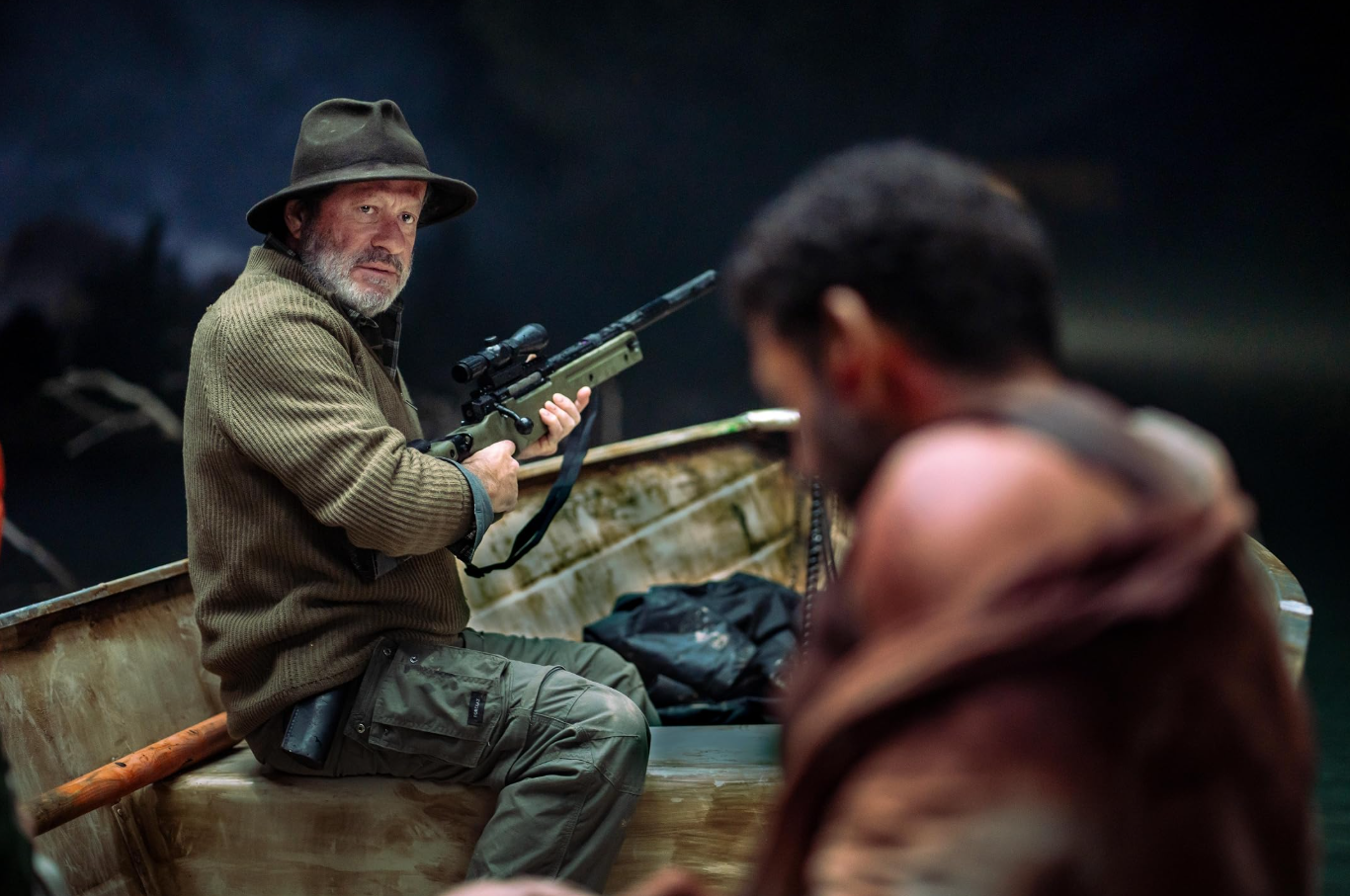
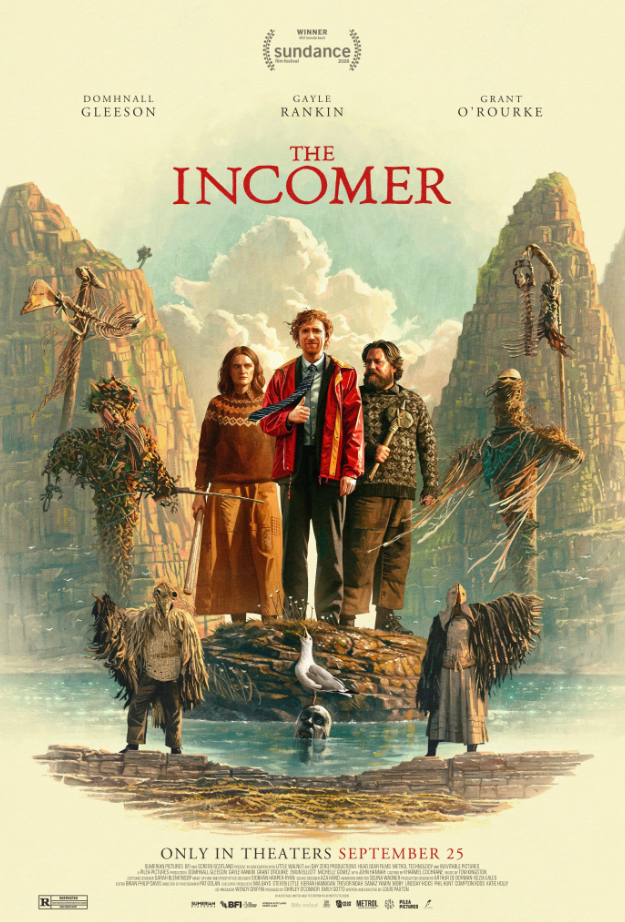
Brother Sandy (O’Rourke) and sister Isla (Rankin) live in isolation on a remote Scottish island. Their world is one of fantastical creatures, strange traditions and a deep fear of the “Incomers”—anyone who is not from the island. Although this is set in the present day, the siblings know nothing of cell phones, the internet or much of the modern world. They live simply, surviving off the land and making the most of whatever washes ashore. Isla, in particular, collects these discoveries, storing them away in a shed that feels almost like Ariel’s secret cove of wonderful things, even as she remains suspicious of what these objects might actually be. For Sandy and Isla, the outside world is largely unknown—and perhaps that is exactly how they like it.
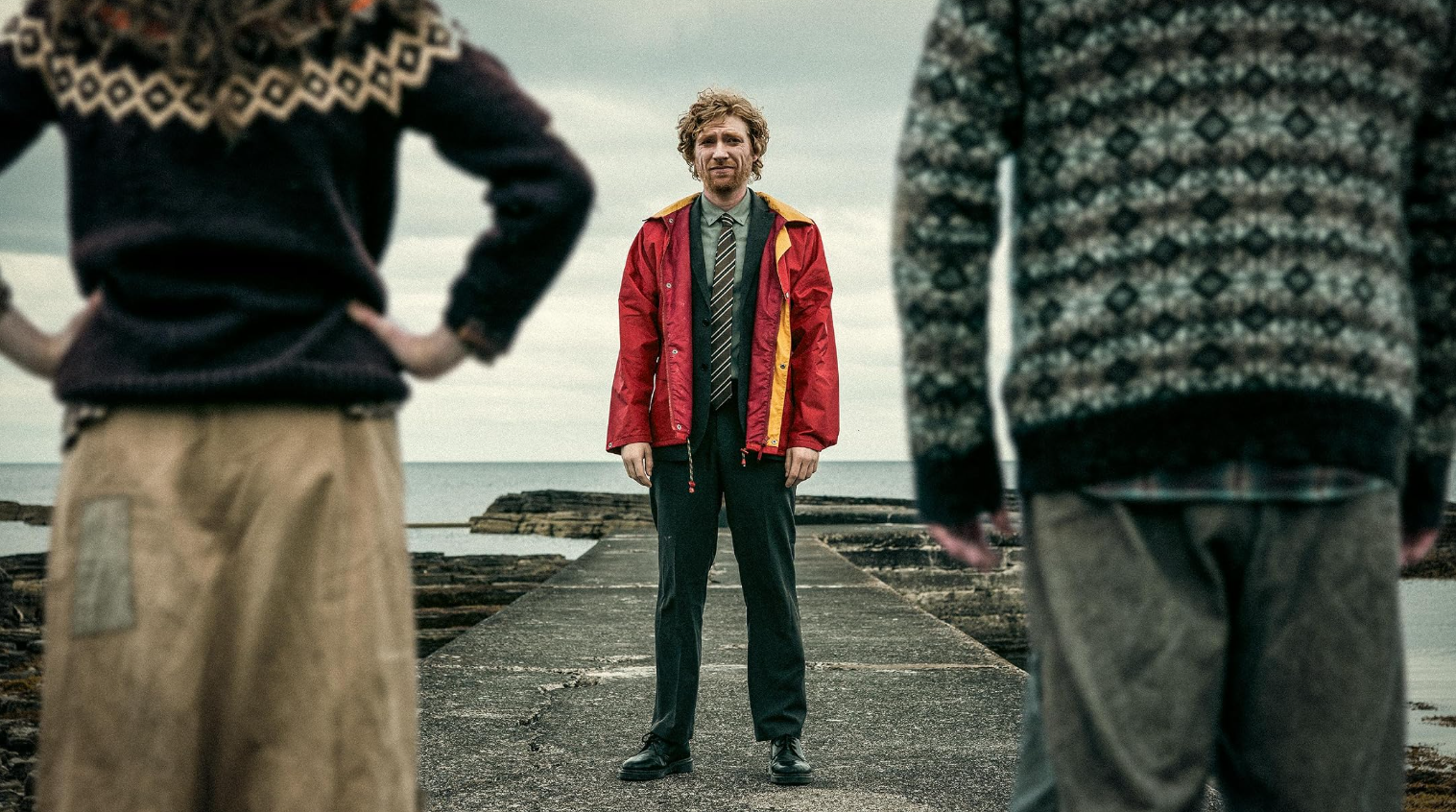
That changes when Daniel (Gleeson), a land recovery coordinator, arrives with some unfortunate news. The government has discovered that this island, previously believed to be uninhabited, is home to Sandy and Isla, and they now need to leave. Daniel has been sent to relocate them to the mainland. The siblings do not take the news particularly well. Daniel, who is far more comfortable working in an office than in the field, finds himself knocked unconscious and taken hostage by the very people he has been sent to evict. As he attempts to figure out how to escape, he discovers that there may be some advantages to being from a world his captors do not understand. His cell phone, for example, can become something akin to magic when Isla and Sandy have no concept of what it is actually capable of.
What follows is a wonderfully absurd comedy as Daniel attempts to explain the mainland while slowly becoming immersed in the strange world of these two siblings. Arguments between Sandy and Isla are settled physically because, quite simply, that is how they have always done it. As Daniel remains on the island, however, the three begin to form an unexpected connection.
In many ways, The Incomer feels like a comedic take on The Wicker Man, with Daniel entering a world governed by traditions and beliefs he doesn't understand. But where that comparison might suggest something far darker, Louis Paxton finds an incredible amount of humor in the disconnect between these characters and their respective worlds.
Gleeson is delightfully absurd as Daniel, playing a man who undergoes a profound change through the experience, and it is fun to go along with him. O’Rourke and Rankin are equally wonderful, offering a masterclass in comedy with one delightfully unhinged moment after the next. Their sibling chemistry is undeniable, and their physical comedy had me laughing out loud far more than I expected. In his feature film debut, Paxton demonstrates a real knack for comic timing, allowing even the most ridiculous moments to retain their sincerity.
Visually, the film is equally engaging. Patrick Golan’s cinematography beautifully captures the island, which almost—almost—makes you want to vacation there, though perhaps not live there. Tom Kingston’s score shifts between different tempos, complementing both the enjoyable and absurd sides of the story. Where the film is at its strongest, however, is in the evolving relationship between Daniel, Sandy and Isla. As they begin to understand one another, the boundaries between outsider and islander start to shift, allowing Paxton to explore what these three very different people can learn from each other.
Unfortunately, the film goes a little too far off the rails in its final act. The arrival of Roz (Gomez) and Calum (Elliott) brings a tonal shift that didn't work as well for me, pushing an already over-the-top film into territory that felt unnecessary and distracting from the much stronger story at its center. Thankfully, Paxton eventually finds his way back, bringing the film to a satisfying conclusion. All in all, The Incomer is an absurd, hilarious and surprisingly heartfelt debut that occasionally goes a little too far.
Review by Cinephile Mike
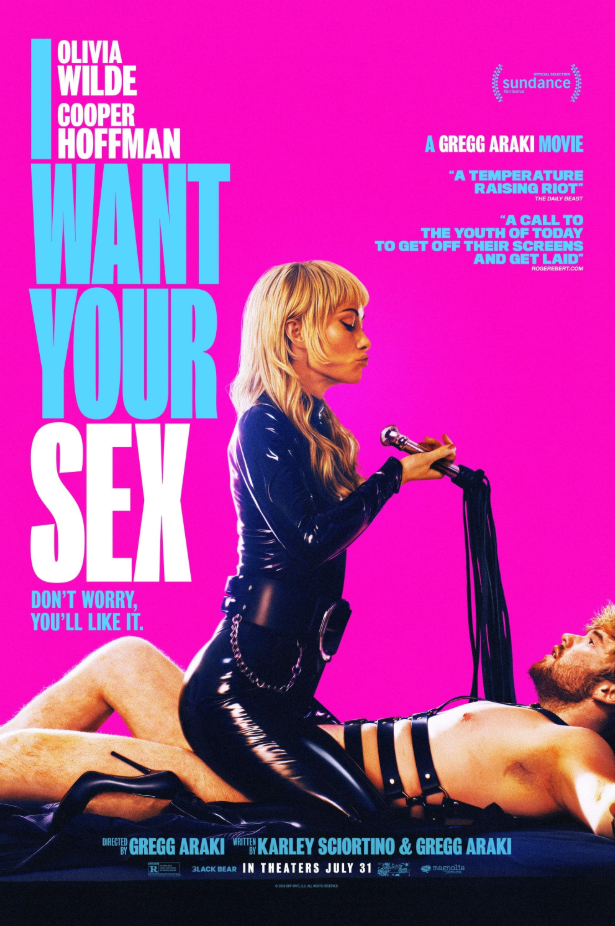
I Want Your Sex
⭐️⭐️⭐️⭐️
Feature Film (Narrative)
Film Production Companies: Black Bear Productions and Desperate
Pictures
Rating: NR / Run Time: 90 minutes
Language: English
Director: Gregg Araki
Writer(s): Gregg Araki and Karley Sciortino
Starring: Olivia Wilde, Cooper Hoffman, Mason Gooding, Chase Sui Wonders,
Johnny Knoxville, Margaret Cho, Charlie XCX and Daveed Diggs
“These were my wildest fantasies come to life.”
Enter a world of sexual freedom, artistic expression and increasingly complicated desires. Elliott Bell (Hoffman), a somewhat schlubby young man trapped in a relationship with Minerva (Charlie XCX) that doesn’t fully satisfy him, and at odds with finding a career path, lands a job with famed artist Erika Tracey (Wilde). Now a member of her team, he helps produce Erika’s avant-garde artwork. He is excited because he has been a longtime admirer of her.
Elliott's appearance immediately sets him apart from Erika's much more fashionable employees, such as fellow assistant Zap (Gooding) and her business manager Vikktor (Diggs), but it doesn't take long for Erika to take an interest in him. Calling him into her office one day, she offers Elliott a commitment-free sexual relationship. Given that his girlfriend doesn’t meet his needs, his eagerness makes the decision rather easy. Their relationship quickly becomes an exploration of different facets of sexuality, with Elliott taking on the submissive role to Erika's dominant personality.
Meanwhile, while trying to put this new life in order, Elliott's roommate Apple (Wonders) remains another important part of his life, and that relationship becomes complicated when Erika invites the two of them into an experience that changes the dynamics between them. As Elliott becomes increasingly fascinated with Erika, his attraction evolves into something much deeper. Eventually, an incident involving Erika sends Elliott down a path that could cost him his freedom, forcing him to question just how much he really knows about the woman with whom he's become obsessed. I'll leave the details there, because this is a film best experienced without knowing where everything is going.
The performances in the film are equally strong, particularly Hoffman and Wilde. Their contrasting energies work beautifully, with Hoffman's eagerness and sexual frustration matched by Wilde's confidence and dominance. The exchanges between them will have you laughing out loud, even at the more awkward moments. Diggs, Gooding and Wonders are also terrific, although I couldn't help wishing their characters had been given a little more to do.
Visually, I Want Your Sex is a knockout. Angelique Clark's production design is sleek, vibrant and almost candy-colored in its perfection, creating a heightened world that feels perfectly suited to Araki's exploration of sexuality. What I found most interesting is the conversation Araki seems to be having about sexual freedom. The film embraces many of the ideals associated with the sexual revolution while placing them within a contemporary culture where boundaries, consent and permission have become increasingly complicated. That tension gives the film something more to say than simply "sex is liberating," and I appreciated that Araki was willing to explore those contradictions.
I also enjoyed watching Araki try to push the envelope. But this is where I found myself wanting more. Having seen how far Araki has gone in some of his previous films, there were moments when I felt as though he pulled back just when I expected him to go further. Some of the story's developments are also fairly predictable, particularly Elliott's growing obsession with Erika, even as the film eventually takes him somewhere considerably more unexpected and gives an ending that is maybe wrapped a bit too quickly. All in all, I Want Your Sex is a stylish and provocative exploration of desire and power, even if Araki doesn't push quite far enough.
Review by Cinephile Mike
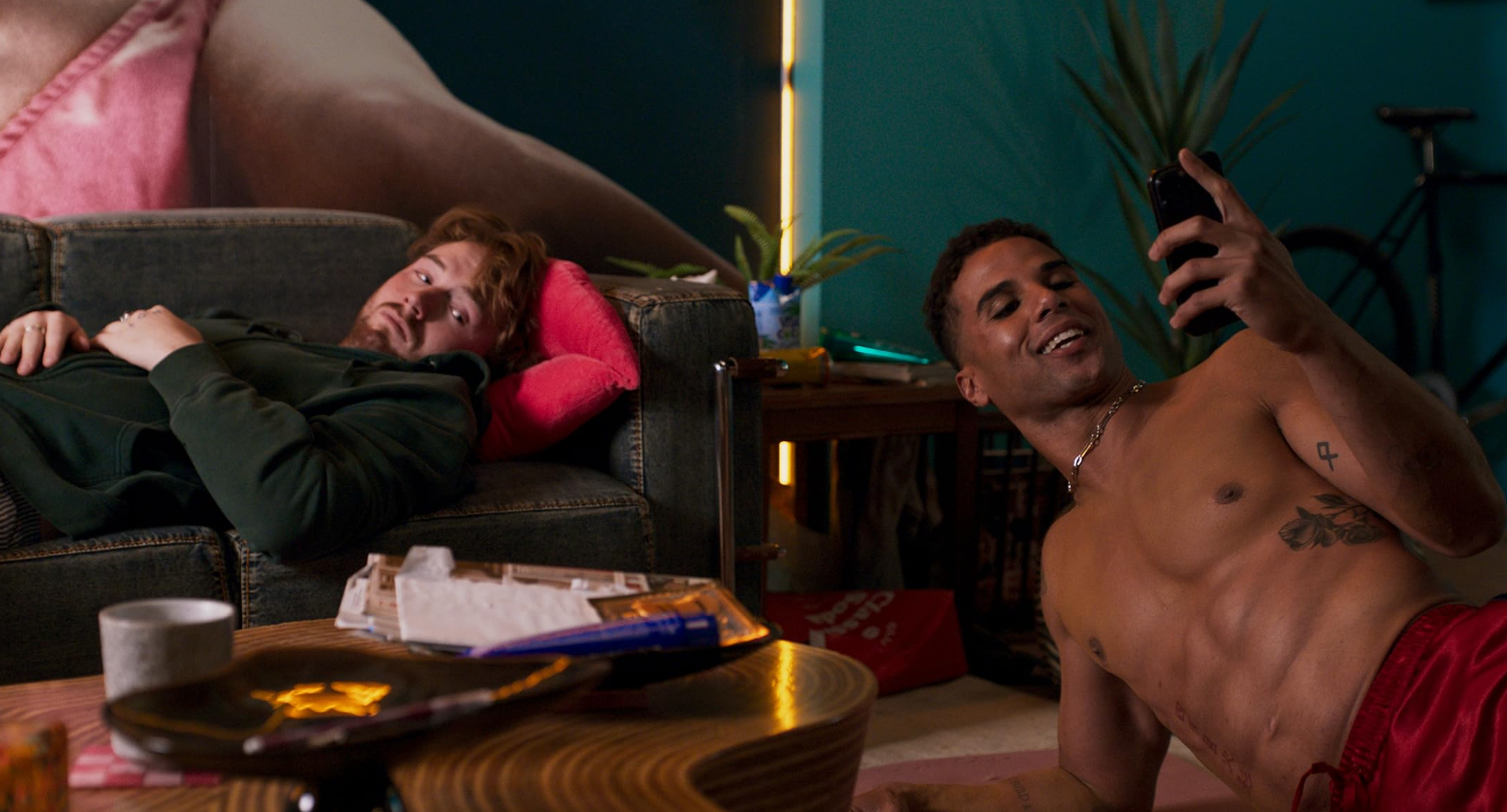
Mission
⭐️⭐️⭐️
Feature Film (Narrative)
Film Production Companies: 65 Wilding Films, BBC Film, Early Day Films,
Ffilm Cymru Wales, Meraki Films, Rapt, Screen Scotland
Rating: NR / Run Time: 87 minutes
Language: English
Director: Paul Wright
Writer: Paul Wright
Starring: George McKay, Emma Naomi, Emun Elliott, Rosy McEwen and Nick Preston
“The world has rejected me, lied to me, alienated me. Before death comes, I must fight back.”
Dylan (McKay) is lost. Working as a waiter at an upscale hotel, he goes through the motions of a life that he increasingly realizes is leaving him unfulfilled. When the CEO of the hotel chain, James (Elliott), arrives to evaluate the staff and their performance, Dylan finds himself under even greater scrutiny. An earlier incident with an intoxicated customer has already reflected badly on him, and while he initially claims to enjoy his job, he eventually admits that the work has become soul-destroying.
Throughout the film, director Paul Wright gives us fragments of Dylan's life through old home movies and voice-over reflections. We learn that when he was seven years old, he briefly died and believes he saw something beyond this life. Now, years later, Dylan finds himself confronting a question that has consumed him: is life worth living? He gives himself seven days to find the answer.
Dylan does not necessarily want to die; rather, he wants to find a reason to live. Over the course of that week, he attempts to experience life in increasingly extreme ways, moving from one destructive encounter to another as he searches for something that will allow him to “find the light” again. Along the way, he reconnects with his sister Claire (McEwen), with whom he was once close. Their relationship has changed over the years, and Wright uses memories of their childhood to suggest a history that the two no longer fully share. One particularly interesting sequence places them within a house of mirrors, creating a visual metaphor for the ways we can see someone from countless angles while still never truly understanding what is happening inside them.
That idea is ultimately at the heart of Mission, but it is also where the film struggled to connect with me. We spend nearly the entire film with Dylan, yet we never truly understand what has brought him to this point. That ambiguity may be intentional—there is not always one clear explanation for someone's unhappiness—but the film gives us so little time with Claire, Becky (Naomi)—his crush and former co-worker at the hotel—or anyone else in Dylan's life that the fragments never quite come together.
Instead, we follow Dylan through one increasingly destructive experience after another. There is an energy to these sequences, and McKay commits fully to a man desperately attempting to feel something, but the repetition eventually becomes difficult to ignore. Each new encounter raises the stakes, yet I found myself waiting for the film to move beyond simply showing us another way Dylan could push himself toward the edge.
James also continues to reappear throughout Dylan's journey, becoming a recurring source of conflict. Their interactions help illustrate Dylan's growing disconnect from the world around him, though the film never completely convinced me why this particular relationship needed to occupy so much space within the larger story.
Visually, however, Mission is compelling. Nick Cooke's cinematography effectively captures Dylan's increasingly unstable journey, keeping us close to a man who appears to be constantly moving without ever knowing where he is going. Roly Porter's score is equally effective, helping build the tension without overwhelming the more intimate moments.
There is certainly an important idea at the center of Mission. The film touches on isolation, mental health and the difficulty some people have in reaching out when they need help. I appreciated that Wright is willing to sit with those questions without offering easy answers. I just found myself wanting more beneath Dylan's increasingly extreme behavior—more insight into the person he was, the relationships that shaped him and what had made him feel so disconnected in the first place. All in all, Mission asks an important question about finding a reason to live, but its repetitive journey kept me from fully connecting with the man searching for the answer.
Review by Cinephile Mike
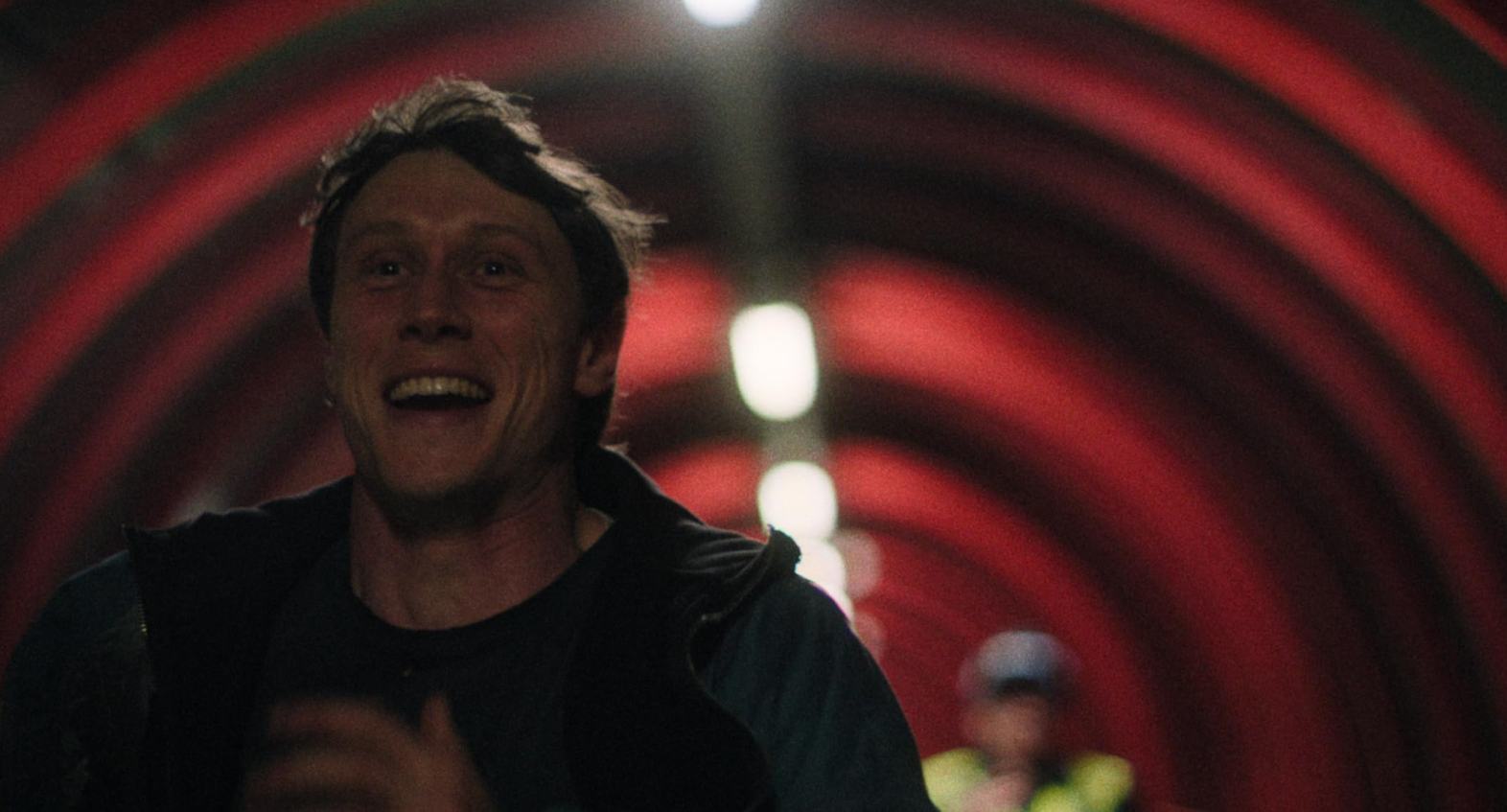
My NDA
⭐️⭐️⭐️⭐️⭐️
Feature Film (Documentary)
Film Production Companies: Reify Films, Unlikeable Woman and WILLA
Rating: NR / Run Time: 102 minutes
Language: English
Director(s): Juliane Dressner and Miriam Shor
Writer(s): Juliane Dressner, Jennifer Fineran and Miriam Shor
Featuring: Ashley Kostial, Ifeoma Ozoma and Lachlan Cartwright
"Do you think they'll come after me?"
That question immediately establishes the fear at the center of My NDA, an incredibly powerful documentary about the people who have found themselves silenced by nondisclosure agreements—and the risks they face when they decide they can no longer remain silent.
The film follows three primary subjects: Ashley Kostial, a former SAP employee; Ifeoma Ozoma, a former public policy specialist at Pinterest; and Lachlan Cartwright, a former executive editor at the National Enquirer. Their stories are very different, but each demonstrates how an NDA can become far more than a legal document. For Ashley, it becomes part of the aftermath of an alleged workplace assault and her experience dealing with her employer. Ifeoma's story involves her challenge over workplace pay and discrimination. Lachlan witnessed stories being buried at the National Enquirer and eventually found himself wanting to tell the story of a system he had once been part of.
What I found particularly impressive is the way these three stories are brought together. Rather than simply telling each story from beginning to end, the film moves between them, allowing connections to develop naturally. We also get legislative footage, journalists, attorneys, archival material and Ashley's video diary, all incorporated into the narrative without making the film feel overloaded. Jennifer Fineran's editing is exceptional. The transitions between all of these different pieces are smooth, and the result is a documentary that remains remarkably easy to follow despite dealing with an incredibly complicated subject.
But as I watched My NDA, I couldn't help thinking that the NDA itself almost becomes the film's fourth major character. It is, in some ways, an invisible character—a piece of paper, a legal agreement sitting somewhere in a file—but it has an enormous amount of power over the lives of the people we meet. It determines what they can say, what they can't say, what they fear saying and, ultimately, how much control they have over their own stories. The NDA may never walk into a room, but its presence is felt throughout the entire film.
And I have to give special credit to Miriam Shor and Juliane Dressner. My NDA is a remarkable directorial debut for Shor, and the two clearly work extremely well together. Shor and Dressner co-wrote the film with Fineran, with Dressner also serving as cinematographer and Fineran as editor. There is a real sense of collaboration in the finished product, and these three women have crafted a powerful story around an issue that desperately deserves more attention.
The film also puts the personal stories into the larger legislative conversation, including the Silenced No More movement and the efforts to change how NDAs can be used in cases involving workplace discrimination and misconduct. But what I appreciated most is that My NDA doesn't suggest that one piece of legislation—or even getting these three people to break their silence—means the problem is solved. This feels like the beginning of a conversation, not the end of one.
There are also smaller filmmaking choices that make the subject even more effective. At one point, we meet Jane, who is dealing with the consequences of breaking her own NDA. Her appearance is brief, but the filmmakers use technology to obscure her identity because of the legal situation surrounding her. It's an effective reminder that the people telling these stories aren't simply speaking without consequences. There is genuine risk involved.
And that may be what makes My NDA so compelling. These aren't abstract legal arguments. We're watching real people wrestle with whether they can tell their own stories, what they might lose if they do, and whether remaining silent is ultimately more damaging than speaking out. These are laws that desperately need to change and My NDA doesn't claim to have solved that problem. What it does is put faces, voices and very human experiences behind an issue that can otherwise feel buried in legal language. Miriam Shor, Juliane Dressner and Jennifer Fineran have created a film that doesn't just tell us about people being silenced—it gives those people a platform to speak. All in all, My NDA is an exceptional documentary with an incredibly important message and a reminder that there is still so much further to go.
Click HERE for an exclusive conversation with Co-Writers and Co-Directors Miriam Shor and Juliane Dressner.
Review by Cinephile Mike
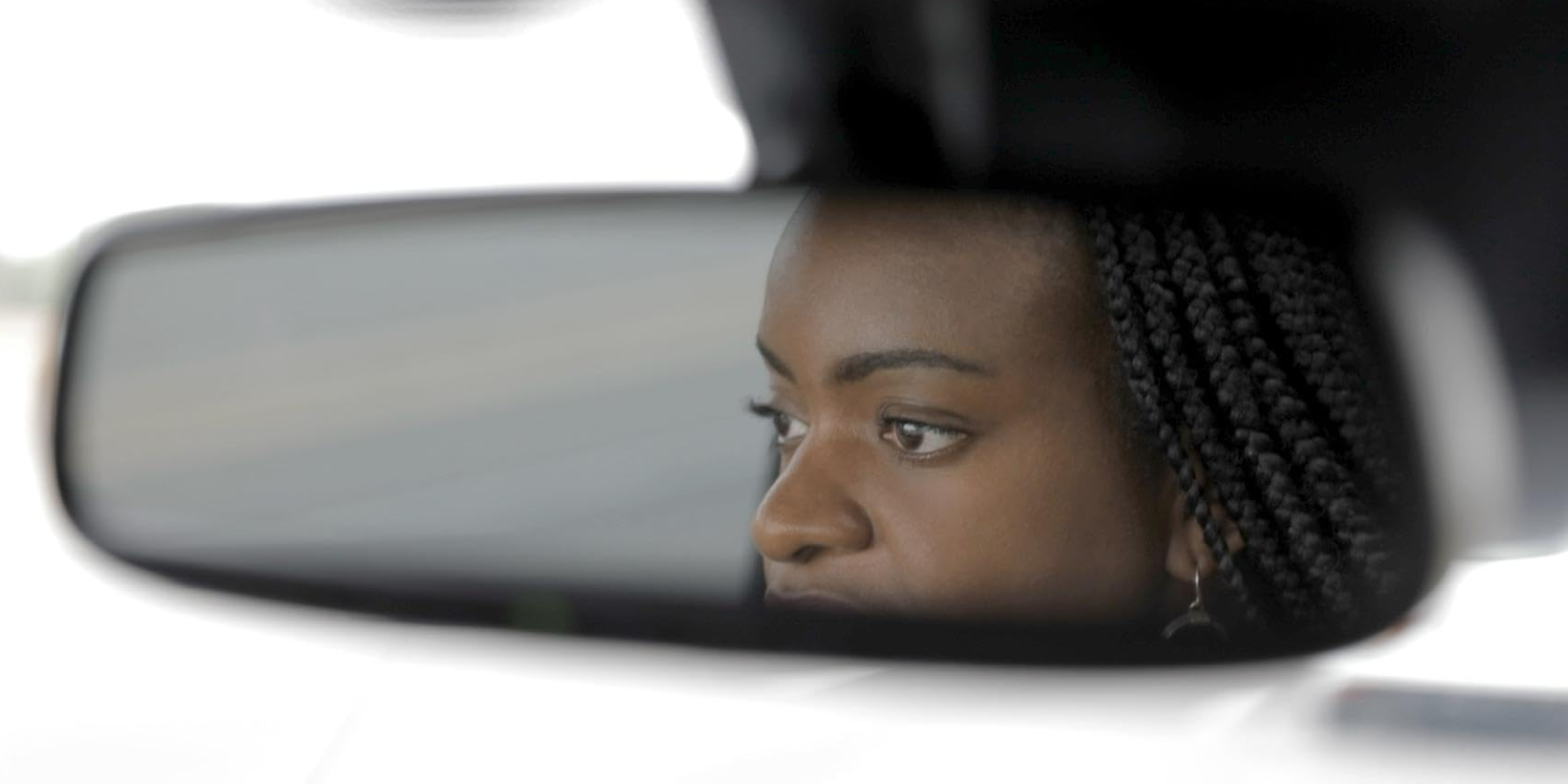
Northbound
⭐️⭐️⭐️⭐️
Feature Film (Narrative)
Film Production Companies: Gatehouse Productions, Broshy Productions,
Beyond the Frame and King Key Movies
Rating: NR / Run Time: 93 minutes
Language: English
Director: William Scoular
Writer: Ashlin Halfnight
Starring: Bruce Dern, Hunter Parrish, Julia Fox, Joanna Cassidy and Dylan Baker
“I didn’t say regret, I said rethink. They are two different things.”
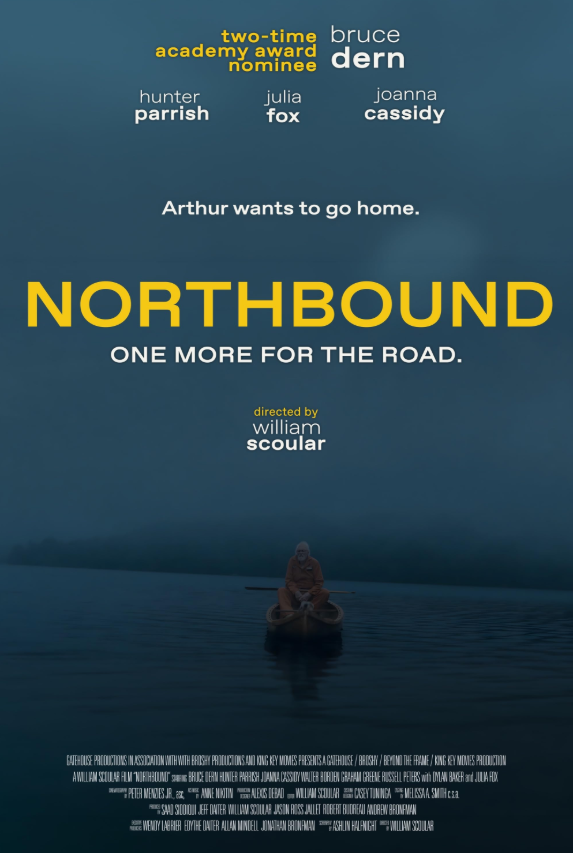
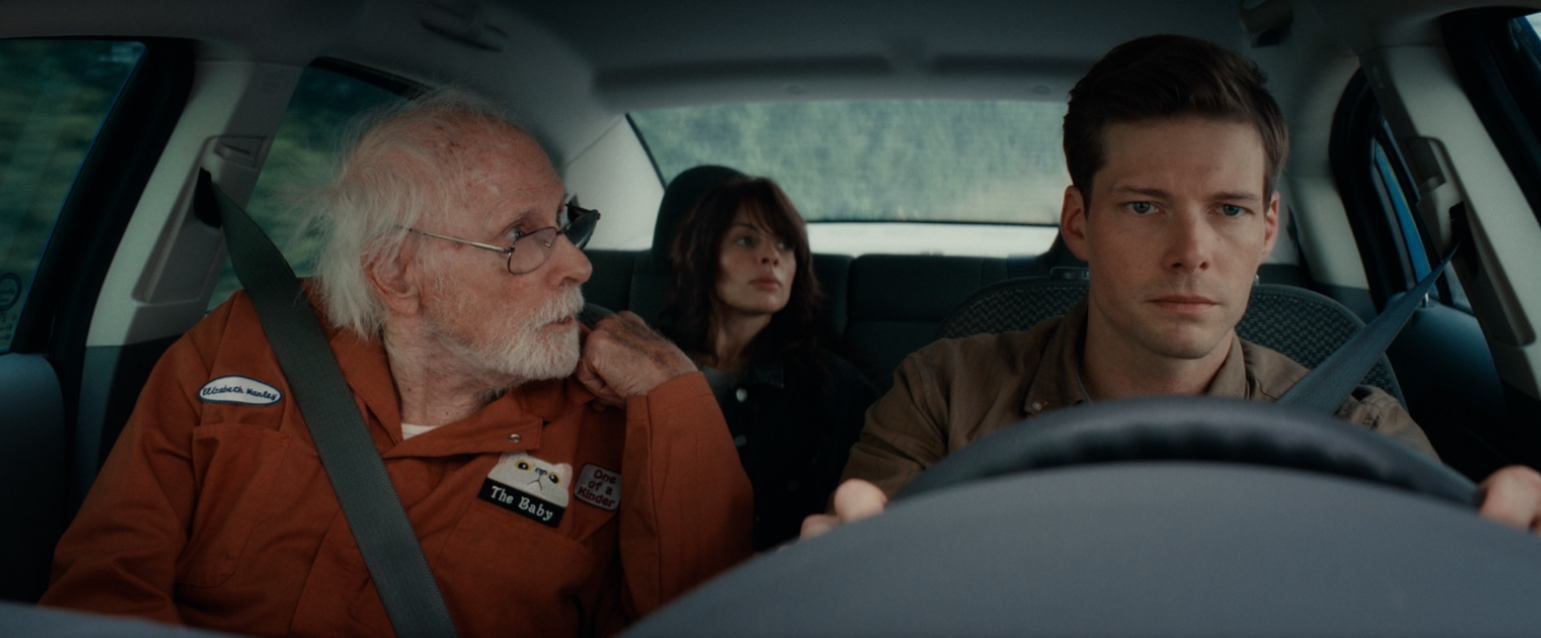
Arthur (Dern) has finally gone too far. After getting kicked out of his Tucson retirement home for a series of offenses that somehow included visits from “nieces,” nudity, drugs and even cockfighting, he has reached the point where the facility can no longer keep him. But Arthur isn't ready to settle into another retirement home. He wants to return to Canada to see his ex-wife, Carol (Cassidy), and despite needing medical care that makes the journey anything but simple, he decides he's going.
His grandson Kevin (Parrish) becomes his reluctant chauffeur after Arthur twists his arm into making the trip. Kevin's father Spencer (Baker) isn't exactly thrilled with the arrangement, repeatedly trying to convince his son to bring Arthur to a proper care facility instead. But the road gives grandfather and grandson an opportunity to reconnect, and along the way they pick up Zoe (Fox), a deaf hitchhiker whose own journey turns out to be considerably more complicated than she initially lets on.
As the three continue north, the trip becomes about considerably more than simply getting Arthur to Canada. Kevin is forced to confront what he wants from his own life, including the expectations surrounding his family's struggling whiskey business and the possibility of choosing a different path. Arthur, meanwhile, is forced to face the consequences of a lifetime spent doing things his own way. As the journey continues, Arthur and Kevin are forced to confront what they want from the lives they still have ahead of them.
Bruce Dern is exactly what this film needs. His dry wit and completely unfiltered approach to Arthur immediately recall the qualities that made him so effective in films like Nebraska, but there's also a vulnerability underneath the comedy. The writing gives Dern plenty of opportunities to say exactly what Arthur is thinking, while Kevin is constantly reminding him that not everything needs to be said out loud. That contrast creates some genuinely funny exchanges while also showing just how differently these two generations see the world.
The chemistry between Hunter Parrish and Julia Fox is also strong, and the central relationship between Arthur and Kevin is where Northbound is at its best. There's a sense that these two were once much closer than Kevin is with his own father, and the road gives them the opportunity to rediscover that connection. The film works particularly well as a story about realizing that it's never too late to figure out what you want from the life you have left, while also serving as a coming-of-age story for both Arthur and Kevin as they confront the consequences of the lives they’ve been running from.
Where the film loses some momentum is with Zoe's storyline. Her revelation about why she is trying to reach Canada, along with the glimpses we get of her past, adds another dimension to the journey, but the subplot ultimately feels somewhat underdeveloped. I understand what it gives Kevin—it helps him recognize that there is more to life than simply existing—but I couldn't help wondering whether the story needed quite so much of it. The film is strongest when it focuses on Arthur and Kevin finding their way back to each other.
Still, there is a sharpness to Ashlin Halfnight's writing that keeps Northbound moving. The comedy doesn't erase the more serious themes surrounding mortality, family and the choices we make with the time we have left. Peter Menzies, Jr.’s cinematography also captures the freedom of the open road beautifully, giving the journey a visual sense of movement while allowing the quieter moments between Arthur and Kevin to breathe. There are plenty of road-trip conventions here, but the film uses the journey to explore what it means to reach a point in life when there really isn't much road left. All in all, Northbound reminds us that it's never too late to make a change—and not to be afraid to do so.
Click HERE for an exclusive conversation with Director William Scoular.
Review by Cinephile Mike
Out There
⭐️⭐️⭐️
Feature Film (Narrative)
Film Production Companies: BFI, FFilm Cymru Wales, Calculus Media, Gorilla TV,
Sweetdoh Films, Bad Cat
Rating: NR / Run Time: 80 minutes
Language: English
Director: Simon Ryninks
Writer: Simon Ryninks
Starring: Nerys Amber Stocks, Aneurin Barnard, Tom Moya, Alice Lowe,
Olivia Southgate, Matthew Aubrey, Remy Beasley, Iwan Rheon and Michael Sheen
“An absence of evidence isn’t evidence of absence.”
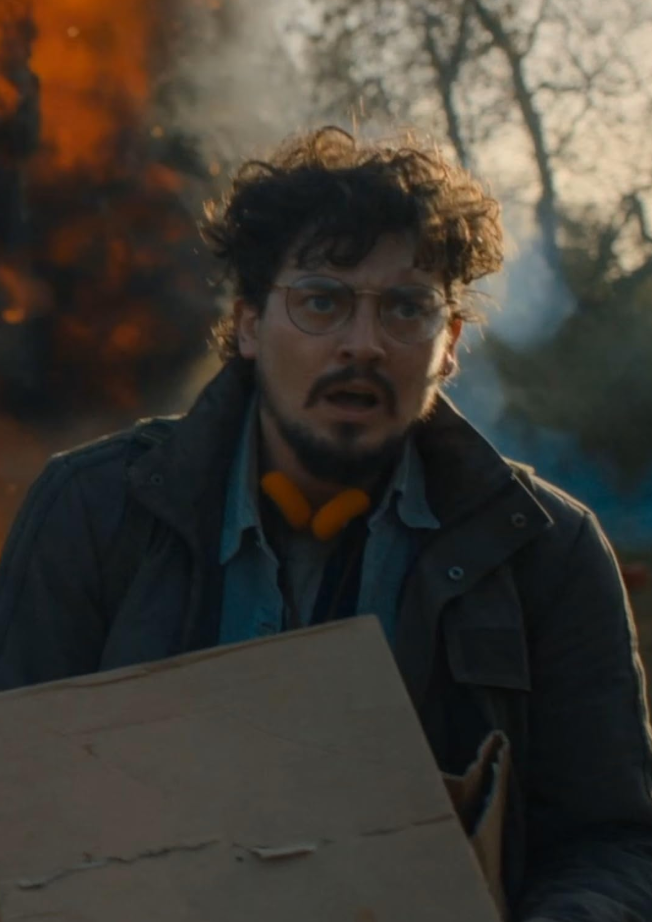
These immortal words by Carl Sagan are a repeated theme in Simon Ryninks’ feature film debut. Out There takes us back to a time when the world was, in a sense, filled with uncertainty. In 1999, Maz (Stocks) is hanging out one night with her best friend Little Elis (Moya), smoking some delightful substances purchased from local hippie and true believer Shifty Griff (Sheen), when she sees some lights in the sky. A UFO…possibly. As we learn, Wales is one of the countries with the most reported UFO sightings. Upon seeing these lights, Maz reflects back on the tragedy she experienced five years prior.
In 1994, while sitting outside with her father, Ministry of Defense scientist Lew (Rheon), they are enjoying staring through a telescope when he is called into work to investigate a strange anomaly. Maz, always obsessed, steals away in the backseat of the car so she can follow him to see what is going on. While spying on him as he studies a strange device, he sees her, calls after her, and then, in a blazing display of lights, he goes missing.
This has never left Maz’s mind, and now, with this new light show, she investigates. Dragging Little Elis along with her, she begins to speak to everyone in Wales to see what they know. She wants to collect information—no matter how extreme—and it even brings her into the crosshairs of not just the Ministry of Defense, but the entire military as they try to uncover what they aren’t being told.
Along the way, their biggest help will come in the form of Bryn (Barnard), a Walkman-sporting conspiracy theorist who has been collecting files and investigating everything about how the Ministry of Defense is covering everything up. As we will learn, there is more of a connection between him and Maz. Fascinated with Maz’s attention to detail, Bryn believes he can assist her, and she can help him in return. As they dig deeper, things will come to a head as they stand up to the powers that be that are trying to keep them from learning about the truth out there.
One of the most delightful elements of the film is the aesthetics. From Sophia Aiudi’s costumes to the production design by Phoebe Anne Harris and art direction by Gwyn Eiddior, we are completely encapsulated in the era. The practical effects are quite effective, and there is something refreshing about watching a story about aliens in a more analog versus digital setting.
The absence of portable devices allows our characters to engage in some interesting conversations about the world around them. Additionally, the blending of some classic tunes with a cheeky, almost video-game-like score by Sami El-Enany adds to the film’s playful atmosphere.
In his casting, Ryninks develops a wonderful ensemble who all have moments to shine. Particularly, in her feature film debut, Stocks makes an impression as the true believer who communicates as much with her wide-eyed sincerity as she does with her turn of phrase. Her camaraderie with Moya’s Little Elis and her sister, Southgate’s Cari, forms a slightly older motley crew, reminiscent of the older teens in Stranger Things. Alongside a delightful, unhinged turn by Barnard and a wonderful, if underused, Sheen, we have a cast of characters that is entertaining to go along with.
The film treats its subject matter seriously while still grounding the absurdity of the situation in a sense of fun. It is in on the joke, and that awareness makes even the more “out there” (pardon the pun) moments entertaining. Where the film is less successful is in balancing its larger ideas. The UFO mystery is engaging, the period setting is lovingly realized, and there is a tender story about family relationships underneath it all, but some of those elements feel as though they are competing for attention rather than coming together completely.
That doesn't take away from the enjoyment of the journey, but it does keep the film from making the impact it might have had with a little more development in those areas. All in all, this touching comedy may not land in the upper echelon of alien pictures, but it provides a nice distraction anchored by a game cast and wonderful look.
Review by Cinephile Mike
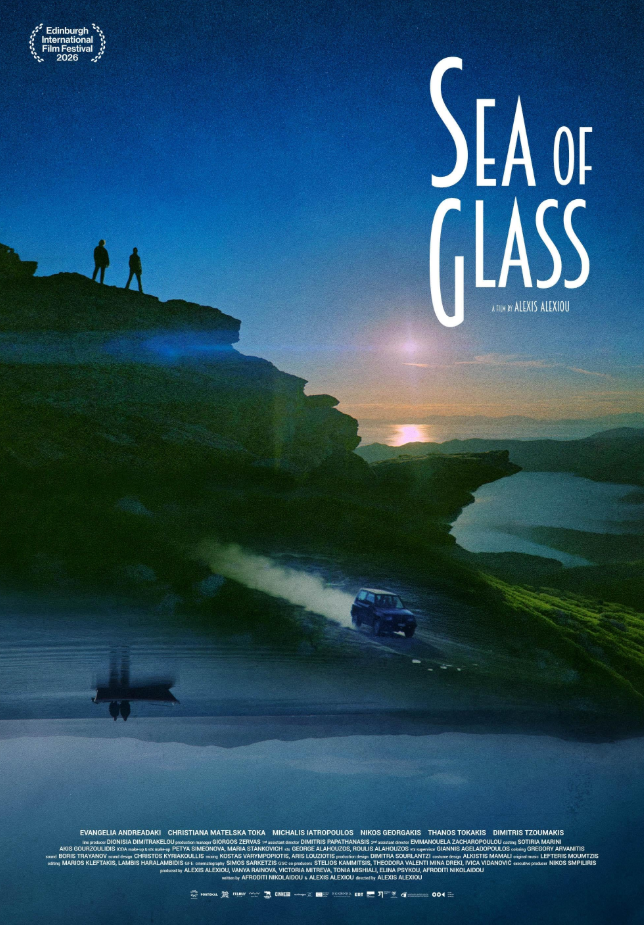
Sea of Glass
⭐️⭐️⭐️⭐️⭐️
Feature Film (Narrative)
Film Production Companies: Tugo Tugo Productions, Portokal, Bark Like
a Cat Films, CinneRent, Felony Film Productions, Jungle Films
and Marni Films
Rating: NR / Run Time: 130 minutes
Language: Greek with English subtitles
Director: Alexis Alexiou
Writer: Afroditi Nikolaidou and Alexis Alexiou
Starring: Evangelia Adreadaki, Christiana Matelska Toka, Nikos Georgakis, Michalis Iatropoulos, Thanos Tokakis, Dimitris Tzoumakis, Spyros Sourvinos, Aggelos Skasilas, Afrodite Sovolou and Giorgos Vourdamis
"It's like a mirror, made of broken glass. Absolute silence. And yet if you listen closely the sea makes a distinct sound."
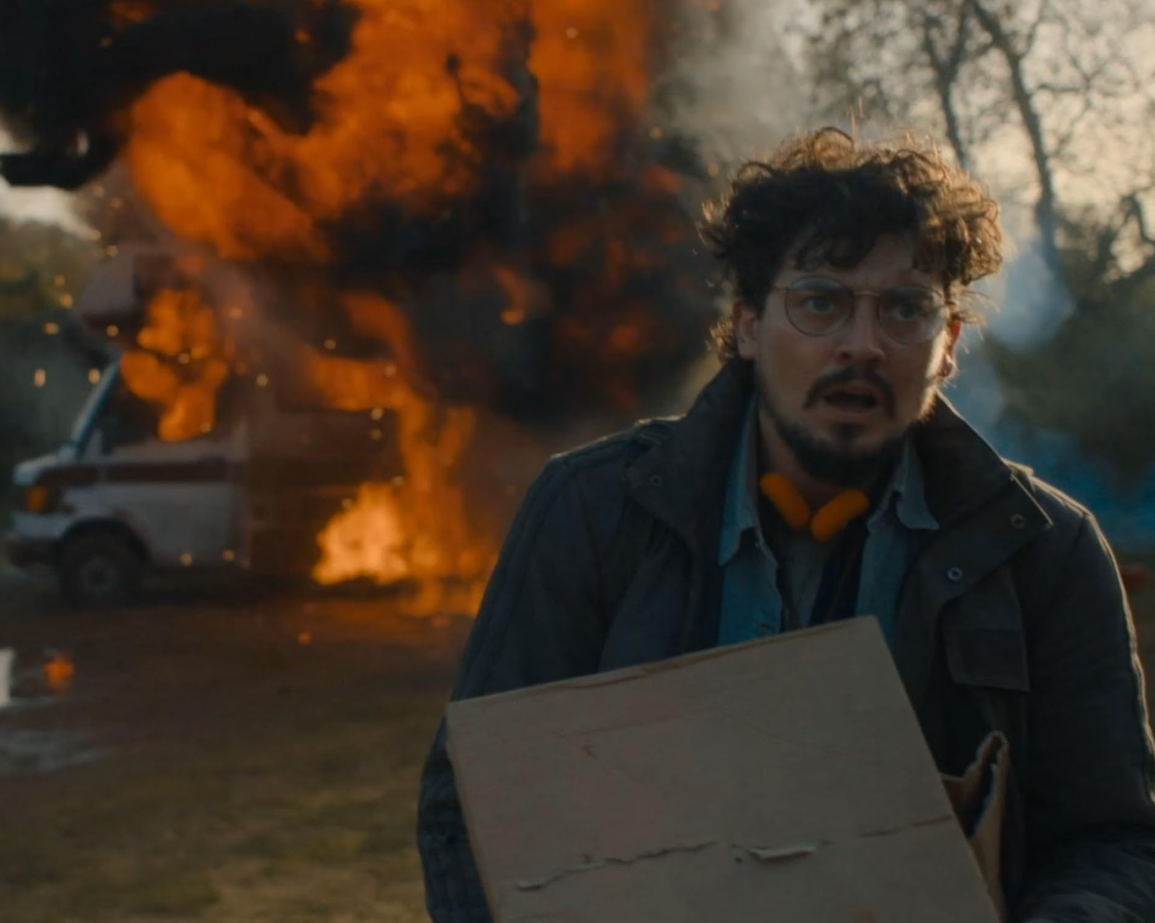
Vangelio (Adreadaki) has spent her whole life caring for everyone except herself. As her husband, an invalid, approaches his 81st birthday, their home is anything but peaceful. He constantly complains, demands her attention and berates her, while their son Yannis (Vourdamis) seems more interested in criticizing his mother than recognizing what she has endured. On the flip side, she has her son Kyriakos (Tokakis), who defends her, and we can see the brothers don’t see eye to eye. After he passes, Vangelio leaves Athens behind and heads toward the sea—the place she has always dreamed of calling home.
She finds an off-season hotel run by Vicky (Toka), a young woman living and working alongside her alcoholic father, known only as The American (Iatropoulos). What initially seems like a temporary escape slowly becomes something more meaningful as Vangelio and Vicky begin to recognize pieces of themselves in one another. Vicky is trapped by her father's volatility, while Vangelio is only beginning to understand how much of her own life has been defined by an abusive husband.
The friendship between the two women deepens as they spend time together, from shopping for a swimsuit to fishing and sharing stories about their lives. But The American becomes increasingly unpredictable, his behavior eventually turns violent, and Vicky feels trapped. There’s nothing she can do. Even the local police are cousins of her father. As Vangelio witnesses the similarities between Vicky's situation and her own past, the two women are forced into a situation that could change both of their lives forever.
There is something beautifully understated about the film. The cinematography by Simos Sarketzis can be breathtaking, particularly when the sea becomes part of the visual language of the film, while Lefteris Moumtzis’ score quietly establishes an atmosphere that can suddenly become incredibly powerful. I especially appreciated the unexpected use of synth tones, which give certain moments an almost dreamlike quality without overwhelming the story. The film understands that sometimes absolute silence can say just as much as music.
But the heart of Sea of Glass is the relationship between Vangelio and Vicky. Watching Vangelio begin to recognize the connection between The American and her own husband is heartbreaking, particularly because she doesn't simply see Vicky's suffering—she sees her own history in it. Their friendship gives the film moments of genuine warmth. When Vicky dances freely with another woman at the bar, Vangelio watches with what feels like pure happiness. She isn't jealous or uncomfortable; she's happy to see another woman experience a freedom that neither of them has been allowed to fully enjoy. For a debut performance, Toka is exceptional in carrying this story, while Adreadaki is effective in moments of silence, captivating the viewer with just her impassioned eyes and looks. They are two sides of the same coin and truly bring the film to life.
The film's title becomes increasingly meaningful as the story progresses. When the sea is discussed as a mirror made of broken glass, you can’t help but be enraptured by the idea. That image captures so much of what Sea of Glass is doing. These characters are surrounded by things that have been broken—relationships, families, dreams and lives—but there is still the possibility of hearing something beyond the silence. Vangelio's journey isn't simply about escaping one abusive husband. It's about finally allowing herself to imagine a life that belongs to her. All in all, Sea of Glass is a beautifully acted and deeply moving story of two women finding strength in each other while searching for a way to break free from the lives that have imprisoned them.
Click HERE for an exclusive conversation with Co-Writer/Director Alexis Alexiou, Co-Writer Afroditi Nikolaidou and star Evangelia Adreadaki.
Review by Cinephile Mike
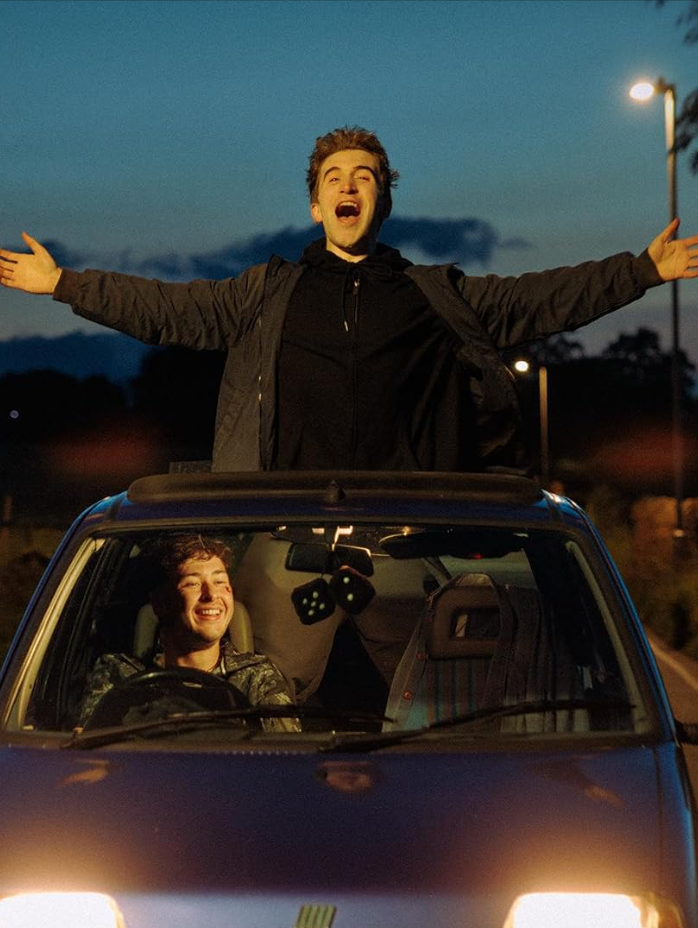
The State of Us
⭐️⭐️⭐️⭐️⭐️
Feature Film (Narrative)
Film Production Companies: Noughty Pictures, Restless Pictures,
CrossDay, 48 Fourteen Films, Lipsync and Screen Yorkshire
Rating: NR / Run Time: 90 minutes
Language: English
Director(s): Ollie Gardner and Jake Harvey
Writer: Jake Harvey
Starring: Samuel Bottomley, Callum Scott Howells, , Safia Oakley-Green, Francesd Barber, Seamus O’Hara and Sunetra Sarker
“You’ve gotta find a way to live. Please give me that. Please.”
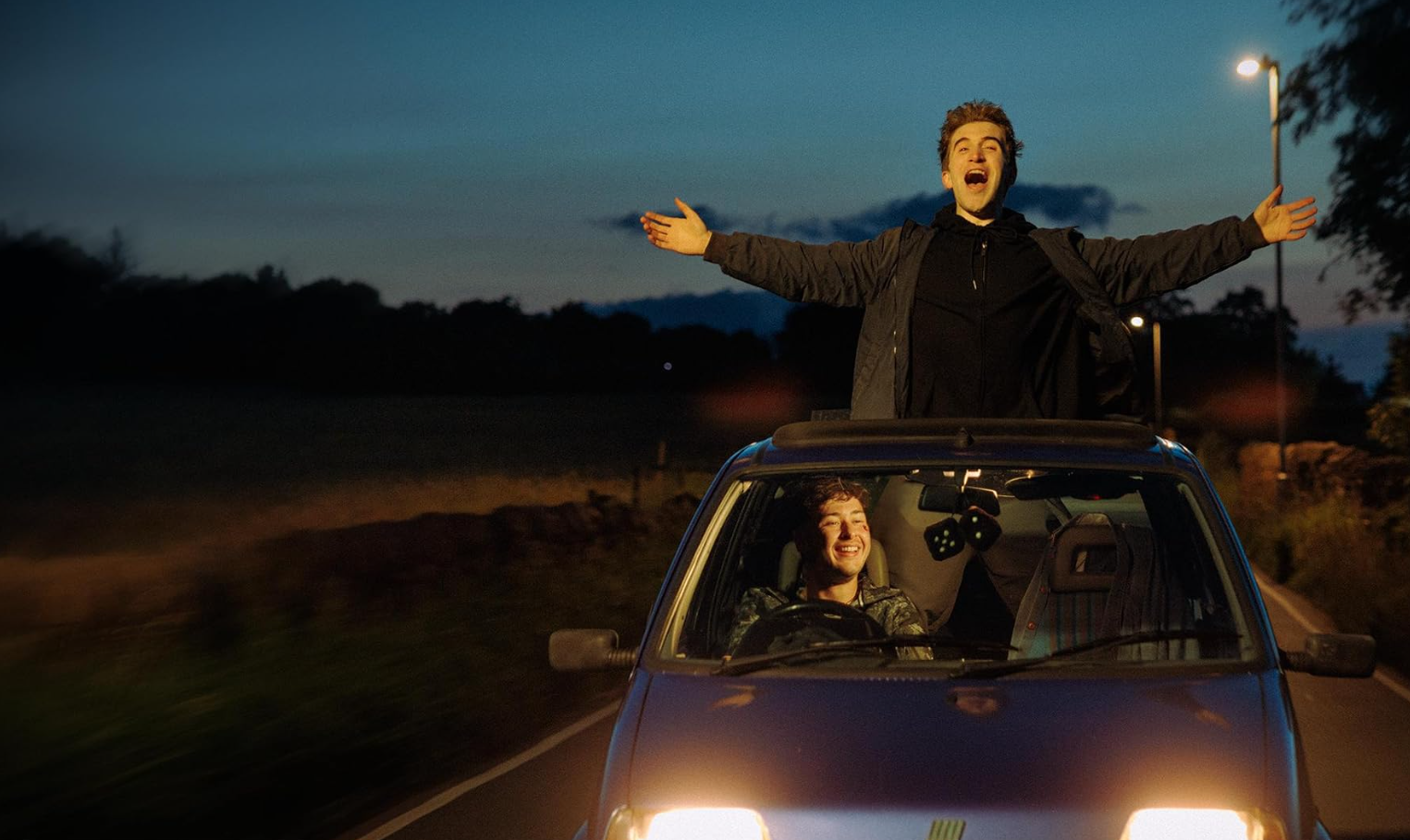
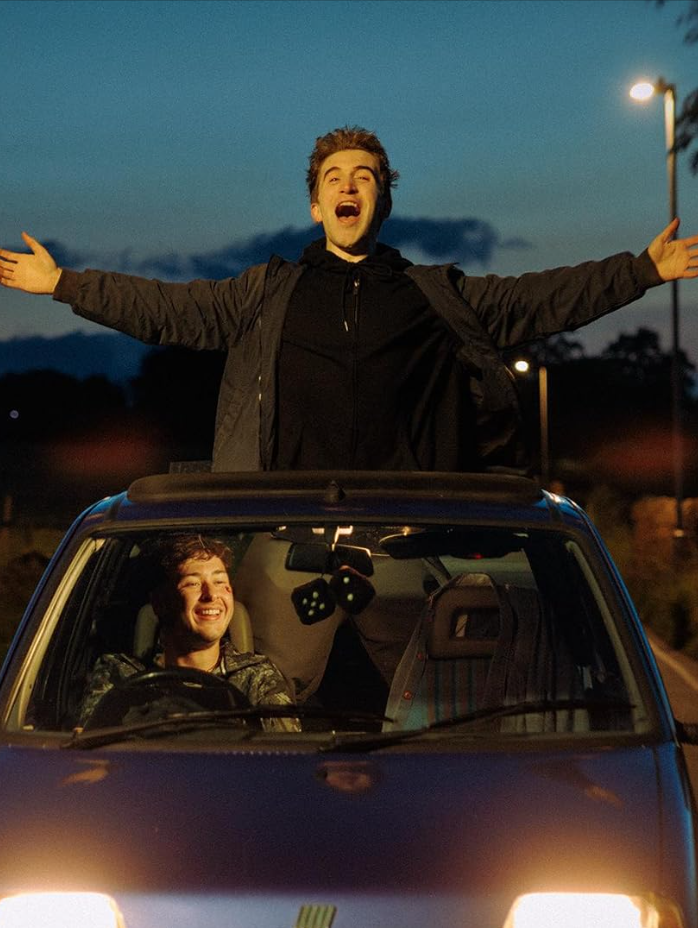
Frankie (Bottomley) is a young man who did not have the best childhood experience. Losing his mother to cancer at a young age, and his father making selective choices, he was raised by the parents of his best friend in the world, Taylor (Howells). They grew up together, and theirs is a friendship that has tested every bound. No matter how frustrating things got, they were there for one another, through the good and the bad.
It is the bad that they are now facing. Tragically, Taylor has been diagnosed with cancer and is not much longer for this mortal plane. Having been transferred to hospice, he is waiting out his time. While there, one of the people he has bonded with is Joan (Barber), an older woman who is fighting the last stages of brain cancer, who unconsciously thinks Taylor is her nephew, giving him a necklace almost nightly that Taylor sneaks back to her. The necklace will have an interesting plot of its own as we follow the boys through the night.
However, it is Frankie that Taylor has been missing for weeks.
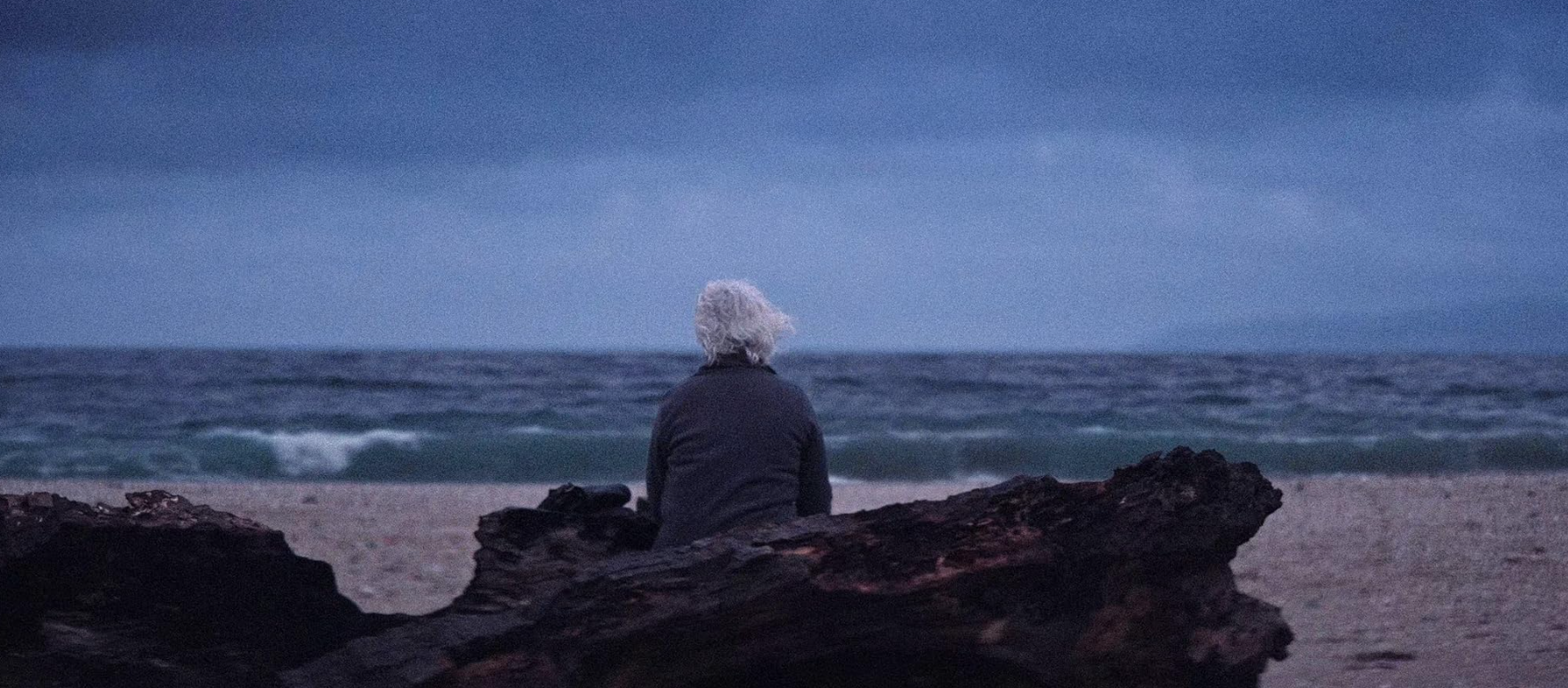
One night, Frankie arrives. Breaking into the hospice after hours, he breaks Taylor out for one final big night. After sneaking out, the best friends, more brothers, head off into the night. Their festivities will take them to a local convenience store where they will “con” some liquor from the clerk, head to a house party, and ultimately spend time on an isolated park bench high on a hill for a fireworks display.
As we learn, this park, this bench, is an emotional touchpoint for these two, and it is here that certain feelings will be revealed. Frankie has been contemplating certain things, and he has a proposal for Taylor. This night wasn’t just about a last best mate’s night out, but a chance for a change. One that could have painful ramifications afterwards.
It is hard to say much more without spoiling Gardner and Harvey’s film, and this is one that, painful as it is within the context of the life events, is so powerful and poignant that you are hooked in from the first moment you see the interaction between Frankie and Taylor. As the boys who loved exploding fireworks as kids become young men on the edge of a precipice, you almost want to hop in the backseat and go for the ride with them.
Harvey, in his feature writing debut of a story based on a best friend, deftly understands nuance in the writing and fleshes out a script that almost feels like it would play out as a documentary. The “theatrical flourish” is stripped away, and you feel the authenticity in the writing. He balances the heavy issues of living with cancer, the impact it has on others, and, more importantly, presents the way that men may not always feel comfortable expressing themselves in relationships.
However, while this idea of addressing masculinity is present, it is not the focus. Instead, this is a tender love story about two friends who aren’t afraid to speak their minds, the good, the bad and the ugly to each other.
Gardner and Harvey, as directors, present a clear voice and picture in their lead pair, Bottomley and Howells, who have chemistry in spades. Regardless of whether or not these two actors have known each other for years or met on set, their chemistry is rock solid. Both of them have tremendous emotional arcs to execute, and they do so deftly without things feeling faked.
At times, it could have seen Bottomley and Howells drift to either side of the dramatic pendulum, but they keep everything grounded, thereby making select key moments pop and land. Additionally, as we watch these two on their journey, Tom Ogden incorporates a beautiful dimension to the story with his score that elevates the emotional stakes. And believe me, they are heightened.
The stunning authenticity and approach to the film makes it almost feel documentary-like, in that nothing is over-acted or overshadowed. When we get to the climax on the hill, I challenge you not to reach for a tissue when we see a particularly poignant moment where Frankie makes the purpose of the night clear to Taylor, and to us.
The craft with which the humor and the drama are balanced is quite refined, and it is exciting to see what comes next from the team of Harvey and Gardner. Ultimately, this is a love story. The love story of two friends who aren’t afraid to speak their minds and remind us that we need to hold certain people near. All in all, this is the rare film that can make you smile, break your heart and remind you just how important friendship can be.
Click HERE for an exclusive conversation with Writer/Co-Director Jake Harvey and Co-Director Ollie Gardner.
Review by Cinephile Mike