NewFest’s 38th Annual New York LGBTQ+ Film Festival - 2026
The 37th Annual NewFest ran from October 9th-21st. So many AMAZING films. Check out reviews of what I was able to catch below!!!

Corpus
⭐️⭐️⭐️
Feature Film (Narrative)
Film Production Company: Neon, Per Capita Productions, Invention Studios,
Canex Creations and Kimerafilm
Rating: NR / Run Time: 125 minutes
Language: English
Director: Arie Esiri and Chuko Esiri
Writer: Chuko Esiri based on the novel Mrs. Dalloway by Virginia Woolf
Starring: Sophie Okonedo, David Oyelowo, Nikki Amuka-Bird, Fortune Nwafor, Jude Akuwudike, Danny Sapani, Modesinuola Ogundiwin, Yasmin Dankaro, India Amarteifio, Toheeb Jimoh, Ogranya, Kehinde Cardoso and Ayo Edebiri
“I never thought you’d settle.”
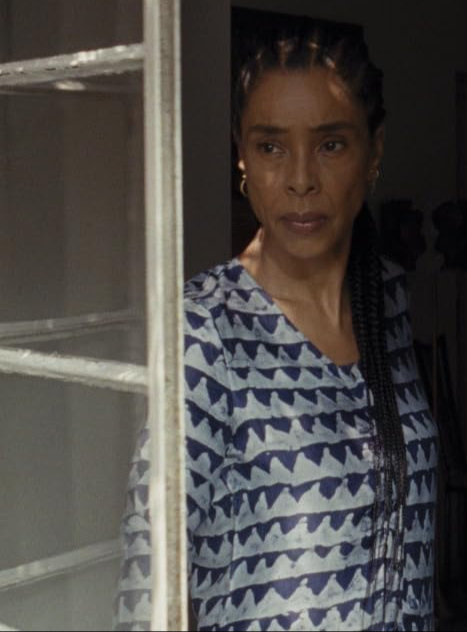
There is something quietly heartbreaking about a person who seems to have everything figured out, yet still feels as though something is missing. In Clarissa, the latest feature from brothers Arie and Chuko Esiri, Sophie Okonedo plays the title character, a woman preparing to host a lavish party at her home in Lagos, Nigeria. She is composed, capable, and seemingly comfortable in her place among the city's wealthy elite. But as the day unfolds, there are moments when her carefully maintained exterior gives way to something more complicated. A look that lingers a little too long, a pause before answering, or an encounter with someone from her past can reveal the doubts and regrets she rarely puts into words. Adapted from Virginia Woolf's Mrs. Dalloway, the film is less concerned with the events of the party than with the memories, relationships, and choices that have shaped the woman preparing to host it.
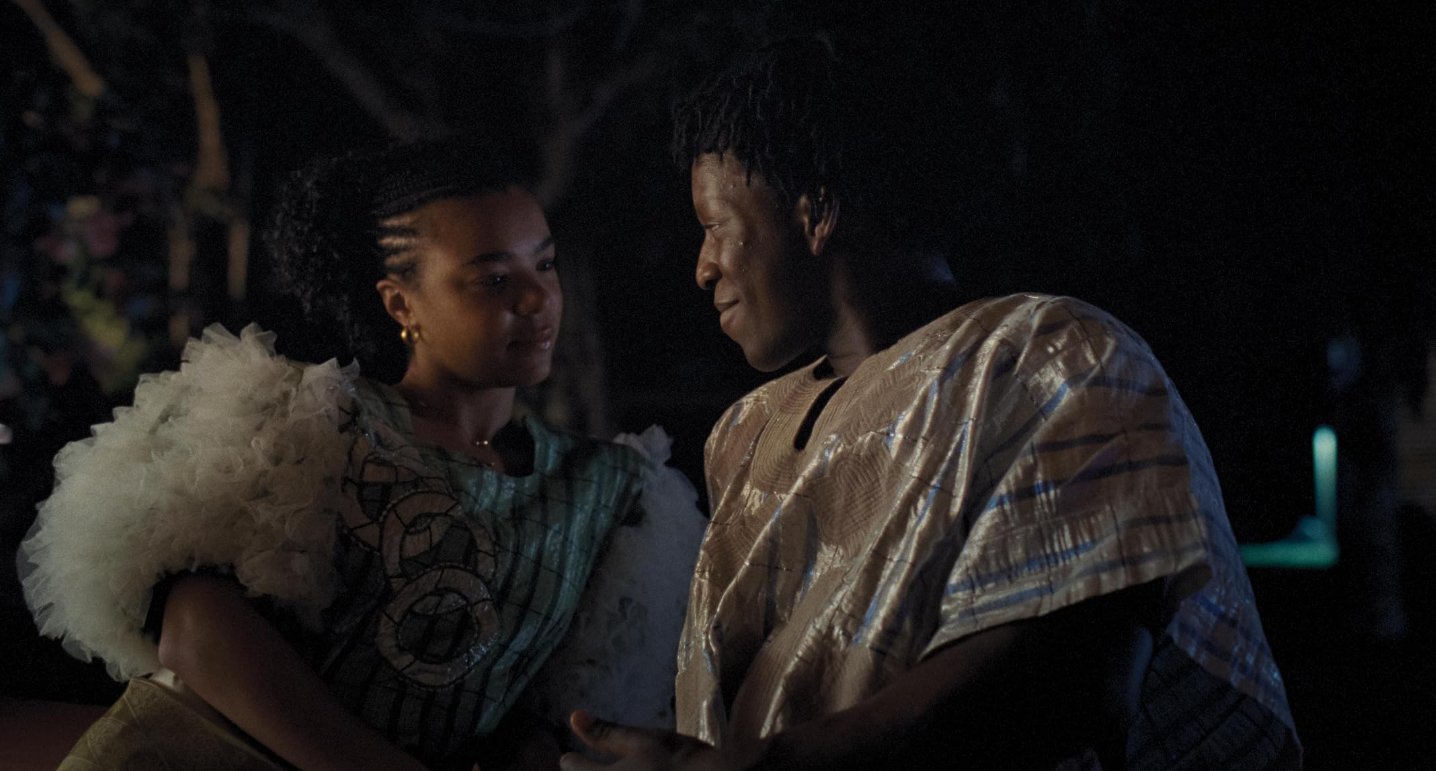
Clarissa is married to Richard (Akuwudike) and has a daughter, Ellie (Dankaro), but the return of Peter (Oyelowo), brings old feelings and unresolved questions back to the surface. Their history suggests a life that might have unfolded very differently, while her reunion with Sally(Amuka-Bird), brings another set of emotions into focus. The film's flashbacks offer a glimpse of Clarissa's younger self, when the possibilities seemed endless and her friendships carried a different kind of freedom. Ayo Edebiri and India Amarteifio are particularly effective as the younger Sally and Clarissa, capturing the warmth and intimacy between two women whose feelings exist within a society that leaves little room for them to be openly expressed. Their moments together, including a carefree day by the sea, are among the film's most affecting, offering a glimpse of a happiness that may never have been possible. The young Peter, played by Toheeb Jimoh, also brings a different kind of longing to the story, as the film explores the difficult choices that can shape an entire life.
The Esiri brothers bring a contemporary Nigerian setting to Woolf's story, with the lives of the wealthy unfolding against the backdrop of a country still dealing with the Boko Haram conflict. The film also follows Septimus (Nwafor), a young soldier struggling with PTSD after a traumatic experience during his service, and his wife, Aisha (Ogundiwin), who works as Clarissa's seamstress. Their story offers a very different perspective on life in Nigeria, one that contrasts sharply with Clarissa's comfortable world. It's an interesting parallel, and it adds another layer to the film, but I found myself much more drawn to Clarissa and the relationships she's trying to make sense of. Septimus's story is clearly important to the film, but I never found it quite as engaging as the questions surrounding Clarissa's past and the life she has built.
Visually, Clarissa is stunning. Cinematographer Jonathan Bloom captures Lagos with sweeping shots of the city and its surroundings, often framing the characters in ways that let us take in the beauty around them. The film has a real eye for composition, whether we're looking at the city or the interiors of Clarissa's home. But there's an interesting contrast between the beauty of these surroundings and what the characters are going through. Clarissa's sprawling home, for all its luxury, can feel almost claustrophobic, as though she's trapped in a life that looks perfect from the outside but doesn't quite fulfill her. It's one of the film's most effective touches, and the visuals often say things about Clarissa that she herself never puts into words.
Okonedo is the film's biggest asset. She does so much with a look or a moment of silence, giving us glimpses of the sadness and uncertainty hiding beneath Clarissa's composed exterior. Here is a woman who seems to have everything, yet can't quite escape thoughts of the people she loved and the choices she made. Her scenes with Oyelowo and Amuka-Bird are particularly effective, as we see old feelings resurface without anyone needing to explain them. Okonedo has also done terrific work this year in Kelly O’Sullivan and Alex Thompson’s Mouse this season, and it's a pleasure to see her bring that same quiet strength and vulnerability to another complicated character. She gives Clarissa an emotional depth that helps carry the film, even when the other storylines don't hold our attention quite as well.
There's plenty to like about Clarissa, although at 125 minutes, it does feel a little long at times. The slower pace fits a story about looking back on your life and wondering what might have been, but there are stretches when the film loses some momentum. I also wish the Septimus storyline had been as compelling as Clarissa's, particularly given how much time the film devotes to it. Still, the Esiri brothers have a strong visual style, and there's a lot to admire in the way they've reimagined Woolf's novel in a contemporary Nigerian setting. They're clearly talented filmmakers, and I'd be interested to see how their work develops as they continue to find the right balance between style and storytelling. All in all, Clarissa is a visually beautiful and thoughtful reimagining of Virginia Woolf's novel, with Sophie Okonedo delivering a quietly heartbreaking performance, even if the film doesn't quite bring all its storylines together.
Review by Cinephile Mike
Corpus
⭐️⭐️⭐️
Feature Film (Narrative)
Film Production Companies: Dip Dip Dive, Pinky Promise and Two Canz Films
Rating: NR / Run Time: 102 minutes
Language: English
Director: Corrin Evans
Writer(s): Lily Cowles and Corrin Evans
Starring: Jeff Wahlberg, Brodie Townsend, Michael Vlamis, Lily Cowles,
Nuha Jes Izman and Ching Valdes-Aran
“I love Vinny, but he only looks out for himself.”
The line could serve as a warning for the characters in Corpus, a film where attraction, ambition, and old entanglements lead a group of friends into increasingly unsettling territory. In 1998, photographer Billie (Cowles) is conducting a photo shoot with an up-and-coming model named Wren (Izman) when an encounter takes a bizarre turn. A year later, Sayo (Wahlberg) is making ends meet as a photographer and drug dealer in New York City, shooting pictures at a local club. He spends much of his time with Ross (Vlamis), a wealthy womanizer, but their friendship is complicated by their shared history with Vince (Townsend), a model and actor who has returned to the city after months without contact. Sayo and Vince have a connection that is difficult to ignore, but their on-again, off-again intimacy comes with plenty of frustration. Despite the mixed signals, Sayo finds himself drawn back in when Vince invites him and Ross to a party at Billie's home.
The destination is a sprawling mansion two hours outside the city, a place that looks as though it has been left to decay while its occupants carry on around it. The walls are crumbling, the furniture is mismatched, and the atmosphere is a far cry from the clubs where Sayo usually works. There, the trio encounters Wren, now living in a very different state from the model seen at the beginning of the film. When they find her covered in blood after killing a chicken for the evening's dinner, it's an early indication that this gathering might not be quite what they expected. Anticipating a party, they're a bit taken aback to discover that the guest list consists of just the three friends, Wren, Billie, and her partner, Cata (Valdes-Aran). Dinner goes well enough, and the evening eventually moves outdoors, where the group enjoys a swim and a few recreational indulgences. But with one snap of Sayo's camera, the mood shifts, and the group's dynamics become increasingly strange.
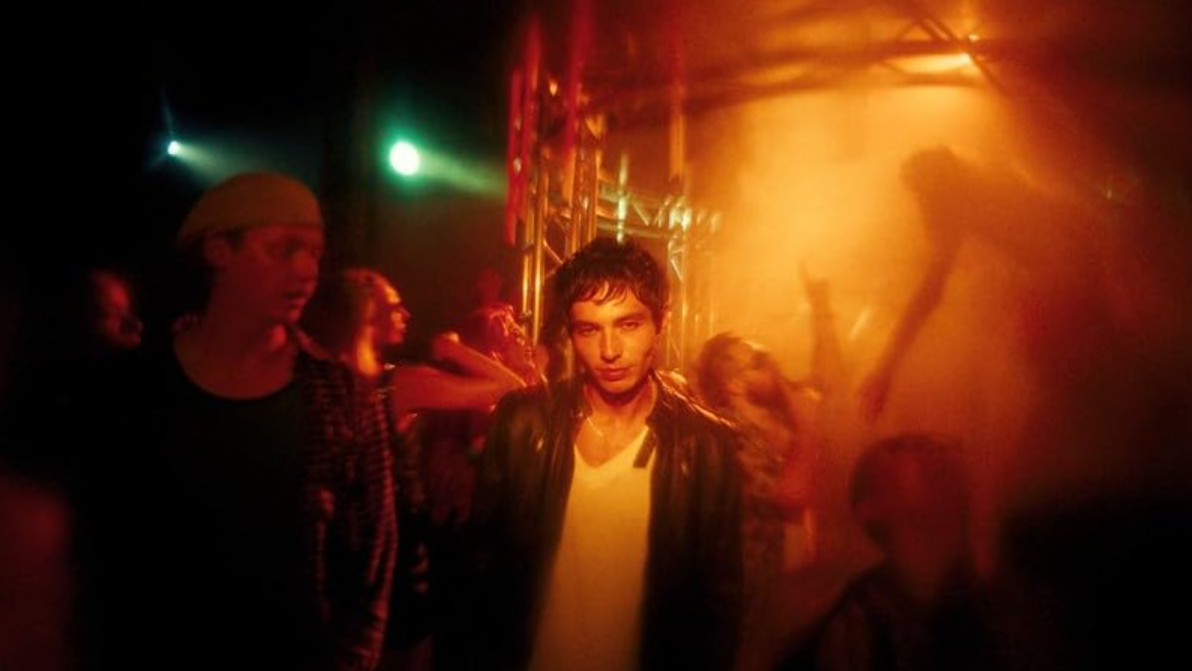
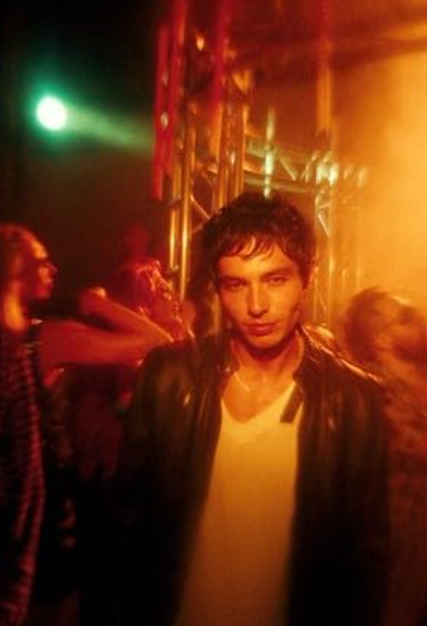
Director Corrin Evans, who co-wrote the film with Lily Cowles, demonstrates a strong visual sensibility, particularly in the way Corpus seems to transform into a different movie once the characters leave New York. The early scenes capture the late-'90s club scene through a neon haze, with the cinematography becoming especially inventive whenever Sayo takes a photograph. Time seems to slow through his lens, giving these moments a distinctive rhythm and making photography feel integral to the film's visual language. At the mansion, the look changes dramatically. The bright colors give way to muted tones, lingering shots, and an increasingly oppressive atmosphere. The production design makes the house feel like a character in its own right, a place that is both alluring and deeply unsettling. It's an effective contrast that gives the film a strong identity, even as the story grows more difficult to follow.
The horror elements also provide some striking imagery. As the party descends into something more ritualistic and bizarre, Evans introduces visual effects that are often genuinely entertaining, along with a distinctive mask that looks as though it might have been borrowed from an S&M club. The mask becomes an especially memorable presence, adding another layer of unease to the shifting relationships and power dynamics. The score by Vaaal contributes considerably to the atmosphere, creating an ominous undercurrent that makes even the quieter moments feel charged with the possibility of something going wrong. There is a confidence to the filmmaking here, and Evans clearly understands how to create a compelling mood. At times, though, the film seems more interested in sustaining that mood than in helping the audience understand what it all means.
The performances are another strength. Wahlberg and Townsend share a magnetic chemistry as Sayo and Vince, conveying the attraction and frustration of two people whose feelings for each other have never quite settled into anything straightforward. Their scenes have an underlying tension that makes their history feel genuine, even when neither seems willing to be entirely honest about what they want. Vlamis brings the right amount of swagger to Ross, capturing the entitlement of a man accustomed to getting what he wants. Cowles, meanwhile, gives Billie a smooth, enigmatic presence, making her both welcoming and difficult to read. She has a way of controlling a room without appearing to exert much effort, and that quality helps explain why the men find themselves so readily drawn into her orbit. Together, the cast makes the shifting relationships engaging even when the larger story starts to lose its grip.
Unfortunately, Corpus is ultimately more successful as a collection of striking images, strong performances, and unsettling vibes than as a cohesive thriller. As the film's big twist comes into focus, there are plenty of questions left unanswered. I'm all for a film that makes you think and leaves some things open to interpretation, but here, there's just not enough information to make everything come together. Why certain things happen, and why some characters are targeted, remains frustratingly unclear. Rather than pulling me deeper into the story, I found myself trying to figure out what was going on and why, and that made it harder to connect with what the film was trying to do. There's a difference between leaving an audience guessing and leaving them scratching their heads, and Corpus too often falls into the latter category. There's enough here to make Corrin Evans a filmmaker worth watching, and Corpus is certainly a visually striking debut with strong performances and an eye for atmosphere. Unfortunately, its commitment to mystery comes at the expense of a more satisfying story. All in all, Corpus is an intriguing genre effort that looks great and has its moments, but could have used a little more clarity to make its story as compelling as its visuals.
Review by Cinephile Mike