27th Woodstock Film Festival - 2026
The 27th Annual Woodstock Film Festival ran October 14th-October 18th, 2026!!!
A few more reviews are still to come…click on the poster or title for the review!!! Some films were seen in other festivals, but check ‘em out!

Selected Feature Films
Blow the Horn
⭐️⭐️⭐️⭐️
The Liberation
⭐️⭐️⭐️⭐️

Once Upon a Time in Harlem
⭐️⭐️⭐️⭐️
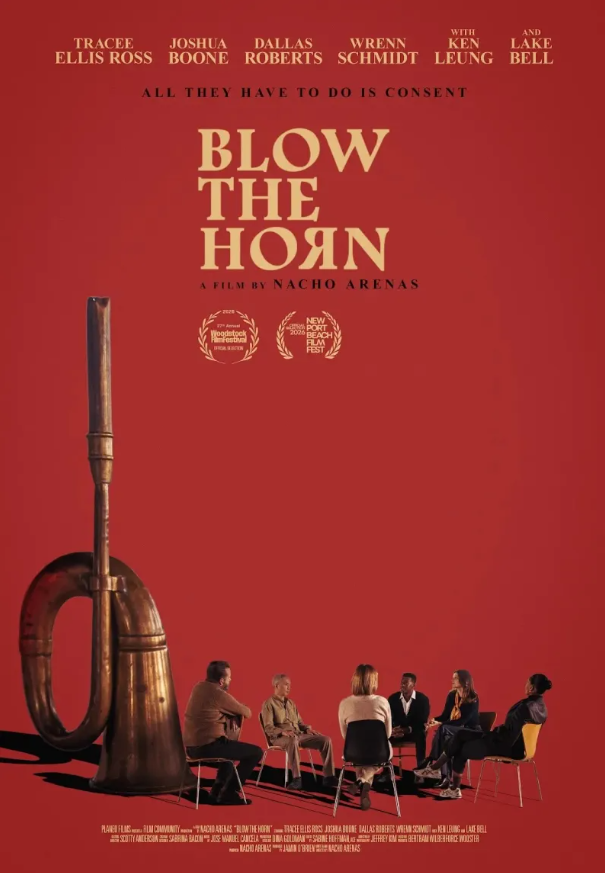
Blow the Horn
⭐️⭐️⭐️⭐️
Feature Film (Narrative)
Film Production Company: Planeo Films and The Film Community
Rating: NR / Run Time: 93 minutes
Language: English
Director: Nacho Arenas
Writer: Nacho Arenas based on the play Bajo terapia by Matías del Federico
Starring: Lake Bell, Joshua Boone, Ken Leung, Dallas Roberts, Wren Schmidt
and Tracee Ellis Ross
“In order for the session to be productive, it is necessary that all parties cooperate in solving each other’s problems.”
Three couples arrive at a stunning, spacious Brooklyn loft for what they believe will be a therapy session. But their therapist, Melina, is nowhere to be found. Instead, she has left a letter explaining that they are to work through a series of eight challenges designed to help them address their problems, with each challenge sealed in its own envelope. Once they complete one, they must blow a horn before moving on to the next. The instructions make one thing clear: nobody is obligated to stay. Yet all three couples agree to participate, and it doesn't take long for the carefully maintained facades to begin cracking.
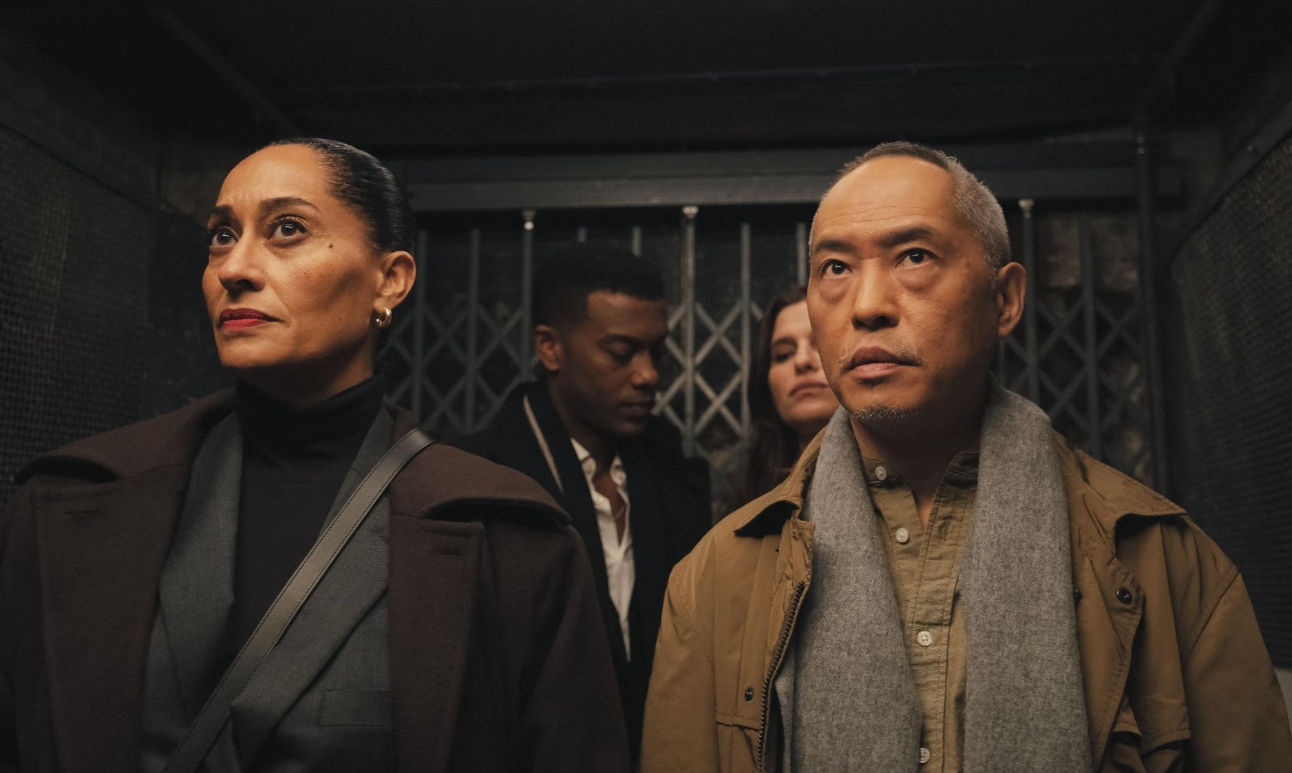
The first couple, Paula (Ross) and Christopher (Leung), have been together since high school. She's a lawyer, he's a CPA, and their relationship is under strain as they struggle with their eldest son's increasingly troubling behavior. Richard (Boone) and Emily (Bell) aren't married and don't live together, with trust issues complicating a relationship that can seem perfectly happy one moment and deeply troubled the next. Then there's Beth (Schmidt) and Robert (Roberts), childhood acquaintances who have been married for years. She's a former kindergarten teacher, while he sells GPS systems for aviation. Both have made choices that have affected their professional lives, and Beth's decision to seek therapy has created friction between them. As the couples begin working through the challenges, more details emerge, and our initial impressions of these relationships become increasingly unreliable.
What makes Blow the Horn so engaging is how the conversations gradually move beyond the problems each couple initially brings to the table. Issues surrounding aggression, intimacy, adultery, and alcoholism come to the forefront, and the participants aren't content simply to answer the questions in their envelopes. They challenge one another, question each other's choices, and occasionally expose things that might have been better left unsaid. There is something deeply compelling about watching people who have just met become so involved in one another's lives, particularly when their own relationships are already in trouble. The film also taps into a familiar human impulse: even when we have the option to walk away from an uncomfortable situation, sometimes we need to know what happens next. In that respect, it brought to mind Yasmina Reza's God of Carnage, another story in which a seemingly civilized gathering gradually becomes a revealing examination of human behavior.
Writer-director Nacho Arenas does an excellent job adapting Matías del Federico's play Bajo terapia for the screen. The premise could easily have resulted in a film that feels like little more than a stage production captured on camera, but Arenas keeps the action immediate and visually engaging. The dialogue moves quickly, with revelations and confrontations arriving at a satisfying pace, yet he also understands the power of silence. Some of the most effective moments come when a character pauses, hesitates, or simply looks at someone else, allowing us to consider what might be going through their mind. Cinematographer Jeffrey Kim strikes a nice balance between intimate close-ups that draw us into these conversations and wider compositions that remind us of the theatrical origins of the material. A restrained atmospheric score by Jose Cancela adds tension without overwhelming the performances.
The loft itself deserves special recognition. Production designer Dina Goldman, art director Zebah Pinkham, and set decorator Jeno Delli Colli have created a remarkable space, with an expansive, open floor plan that initially feels luxurious and inviting. As the session progresses, however, that same space begins to feel increasingly confining. The couples may have plenty of room to move around, but there is nowhere to hide from the conversations unfolding around them. The film also periodically shifts to views from security cameras, adding another layer to the experience. We never meet Melina, but these glimpses make us wonder how much of what is happening might be observed from outside the room. I found myself questioning what was really going on, and that uncertainty only added to the growing tension.
The performances are excellent across the board, with not a weak link among the six leads. Each actor finds subtle ways to reveal new dimensions of their character as the challenges progress, and details that initially seem insignificant can take on a different meaning as we learn more. The ensemble works particularly well because nobody feels as though they are simply waiting for their turn to deliver the next big revelation. The characters listen, react, deflect, and challenge one another, making the conversations feel surprisingly natural. As the layers peel away, it's easy to recognize something familiar in these people, which can be both comforting and deeply unsettling.
As the film moves toward its climax, Arenas begins pulling the various threads together in ways I didn't anticipate. The revelations genuinely caught me off guard, and the story takes several turns that force us to reconsider what we've seen. Unfortunately, the resolution arrives almost as quickly as the tension has built. After spending so much time watching these relationships unravel and wondering where everything is heading, I wanted a little more time to sit with what the film had revealed. Instead, the final stretch moves so swiftly that, when the credits roll, there's a moment of genuine disbelief: Wait, that's it? It's particularly frustrating because the film had come so close to being something truly exceptional. A little more breathing room at the end could have made a significant difference. All in all, Blow the Horn is a sharply written, brilliantly performed relationship drama that keeps you guessing and holds up an uncomfortably familiar mirror to human behavior, even if its rushed conclusion prevents it from reaching its full potential.
For an exclusive discussion with Writers/Director Nacho Arenas, click HERE.
Review by Cinephile Mike
The Liberation
⭐️⭐️⭐️⭐️
Feature Film (Narrative)
Film Production Company: Sight Unseen Pictures, Scythia Films, New Native
Pictures and Spooky Pictures
Rating: NR / Run Time: 124 minutes
Language: English
Director: Guy Nattiv
Writer(s): Noa Berman-Herzberg and Guy Nattiv
Starring: Carrie Coon, Lily James, Bella Ramsey, Odessa Young and Tracy Letts
“It’s my gift. Seeing people for who they are.”
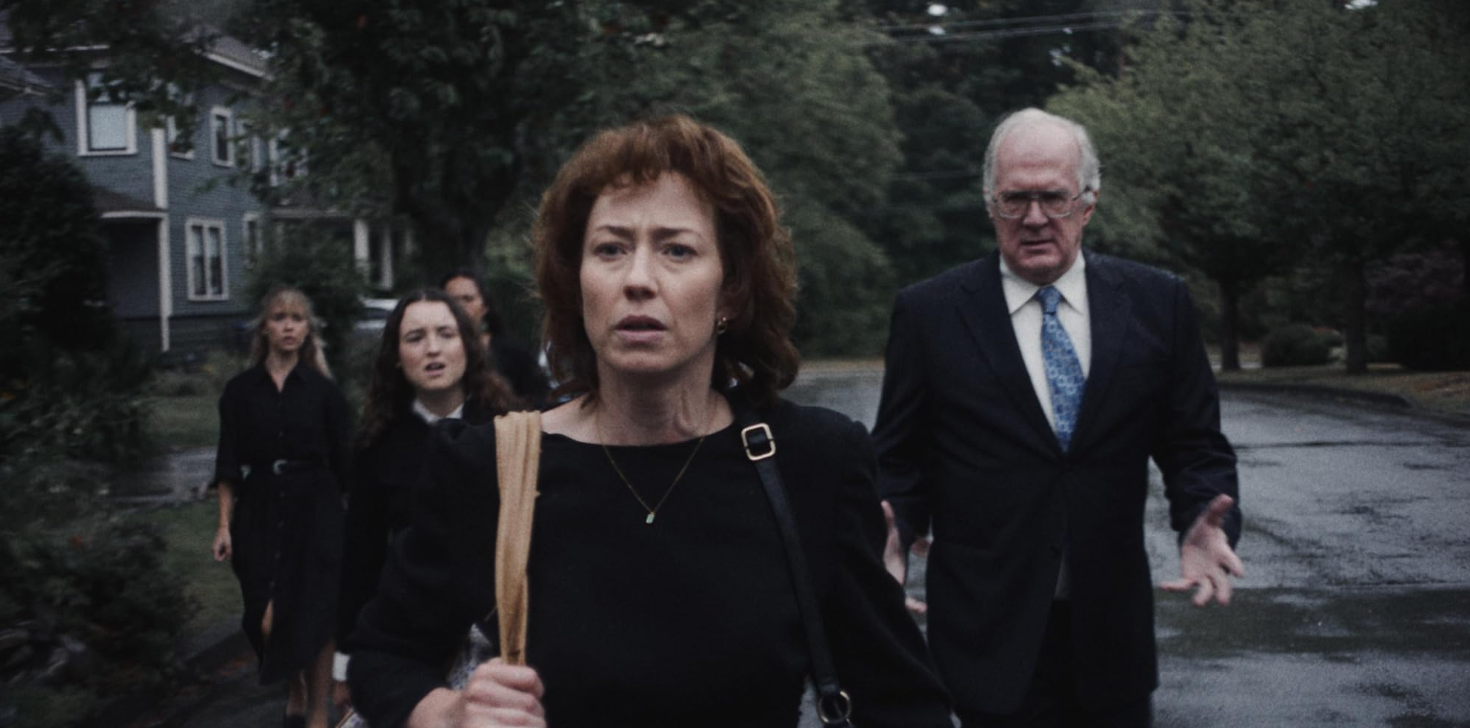
Trauma comes in all shapes and forms, and its aftermath can be unpredictable. For some, it takes years to heal; for others, the pain never entirely goes away. In The Liberation, Rita Cooper (Coon), a Holocaust survivor who lost her mother and three sisters during the war, has spent decades trying to build a life beyond that unimaginable loss. Living in New Jersey in the 1980s, Rita works as an assistant bank manager before returning home to her husband, Reuben (Letts), and their daughters, Ella (Ramsey) and Jo (Young). Between family responsibilities and caring for her elderly father as his dementia progresses, Rita's life has become increasingly frustrating and unfulfilling. Then a new customer walks into her bank, setting in motion a chain of events that will change everything.
Ricki King (James) has a gift for making people feel seen, and she recognizes something in Rita that she believes she can help. She invites her to join clarity.honesty.forgiveness, an organization promising women a safe place to find themselves and become the best versions of who they can be. Initially reluctant, Rita eventually gives in to Ricki's invitation and discovers a community that seems to offer the understanding she's been missing. But there are warning signs from the beginning. At her first overnight gathering, Rita discovers that her cigarettes and medication have been taken, with the group insisting that she needs to return to a more natural state. As she becomes increasingly involved, she is given a new name, Naia, and gradually distances herself from her family, eventually leaving them behind to join Ricki and the other women at a remote commune.
The film moves between Rita's transformation and the later efforts of Ella and Jo to bring their mother home. The sisters approach the situation differently, but Ella becomes increasingly determined to uncover what is really happening within the commune. Her investigation, aided by a former member of Ricki's group, reveals troubling evidence that suggests the organization is far removed from the safe haven it claims to be. Meanwhile, Rita's growing estrangement from her family becomes painfully clear in moments such as a roller-skating outing when she leaves Reuben behind to skate with Ricki. These seemingly small incidents reveal just how thoroughly Ricki has worked her way into Rita's life. As the two timelines converge, the tension builds toward a devastating confrontation, with the sisters discovering that getting their mother to leave may be far more complicated than they imagined.
Based loosely on the life of director Guy Nattiv's grandmother, The Liberation, co-written by Nattiv and Noa Berman-Herzberg, offers a disturbing look at how cults exploit people's vulnerabilities. What makes Ricki so unsettling is how little she needs to do to maintain her hold over the women around her. With her long dark hair, bright eyes, and inviting smile, James gives her a warmth that makes her initial appeal understandable. But watch how quickly that warmth can disappear when someone questions her or steps outside the rules she's established. James understands that Ricki doesn't need to intimidate everyone all the time; she simply needs them to believe that she knows what's best for them. It's a quietly unnerving performance that makes the character's influence far more believable.
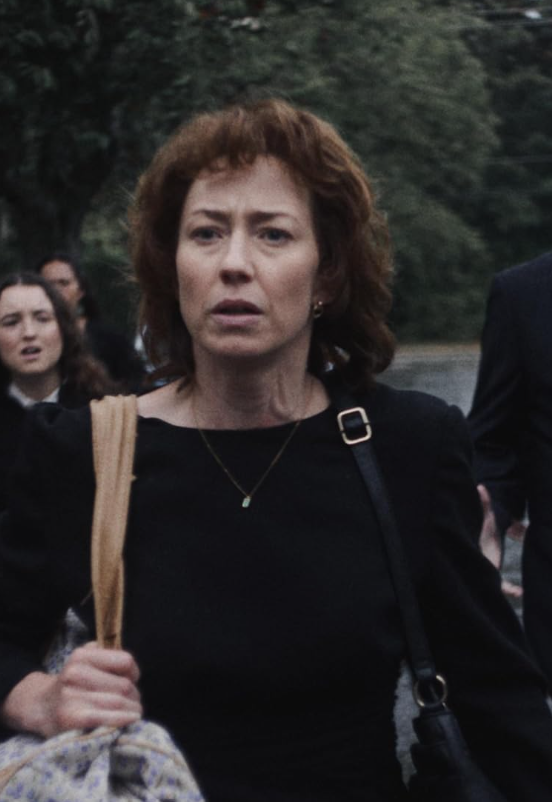
As Rita, Coon gives a career-best performance that makes the film's emotional journey work. What struck me most is the contrast between how much Rita has kept inside and what happens when she can no longer contain it. Coon lets us see a woman who has spent years trying to carry on despite the losses and frustrations that have shaped her life. When Ricki offers her the possibility of starting over, we can understand the appeal even as we see Rita drifting further from the people who love her. As her transformation takes hold, Coon changes the way Rita speaks, carries herself, and responds to the world around her. And when the restraint finally gives way to anger and grief, the release is startling. Even as Rita makes choices that are difficult to accept, Coon never loses sight of the woman beneath them.
The film's sparse score is particularly effective, adding weight to moments of tension without overwhelming the performances. Nattiv also understands that the most disturbing aspect of a cult is not necessarily its most overtly threatening behavior, but the way it can make control feel like liberation. Ricki's community offers Rita connection, understanding, and the possibility of starting over, all things she desperately needs. That is what makes its influence so unsettling: the very things that attract Rita are also the tools Ricki uses to manipulate her. At times, I wanted the film to explore these ideas more deeply, particularly as the story moves toward its conclusion, but the performances keep the material compelling even when some of its observations feel familiar. All in all, The Liberation is a haunting look at how the promise of belonging can become a means of control.
Review by Cinephile Mike